

### Blog Post:
Pet-friendly home modifications are essential for aging-in-place homeowners who want a durable, safe, and easy-to-care-for living environment for both themselves and their pets. The right upgrades can help reduce daily effort, minimize pet-related damage, and increase independence — all while supporting your long-term goal of staying in the home you love.
Key Takeaways
- Combine pet-friendly home modifications with universal design choices to save money and boost safety, durability, and ease-of-care for years to come.
- Invest in pet-proof flooring and integrated pet care features with realistic expectations about cost, installation, and cleaning requirements.
- Demand technical specifications and test data (like scratch ratings and slip resistance) to avoid common upgrade regrets and ensure best results for both people and pets.
- Why design pet-friendly, aging-in-place homes?
- Step-by-step guide: Planning Your Home Modifications
- Advanced Analysis & Common Pitfalls
- Conclusion
- FAQ
Why design pet-friendly, aging-in-place homes?
Designing your space with both pet-friendly home modifications and aging-in-place upgrades in mind offers real, everyday value. As Americans age, the drive to remain independent at home remains strong: recent data shows 85% of those 65+ want to stay in their home and community (source), 88% of people aged 50–80 consider it essential (source). With U.S. seniors now making up 61.2 million (18% of the population, source), the need for safe, low-maintenance, and pet-proof upgrades is higher than ever.
The overlap between aging-in-place and pet ownership priorities is direct: both require slip-resistant, easy-to-clean floors, reduced need for stooping and lifting, and features that eliminate daily hassles and prevent injuries. When you’re remodeling for aging in place, every flooring or pet-care choice should pull double duty. Failing to do so means duplicate spending and updated surfaces that may not meet your evolving needs.
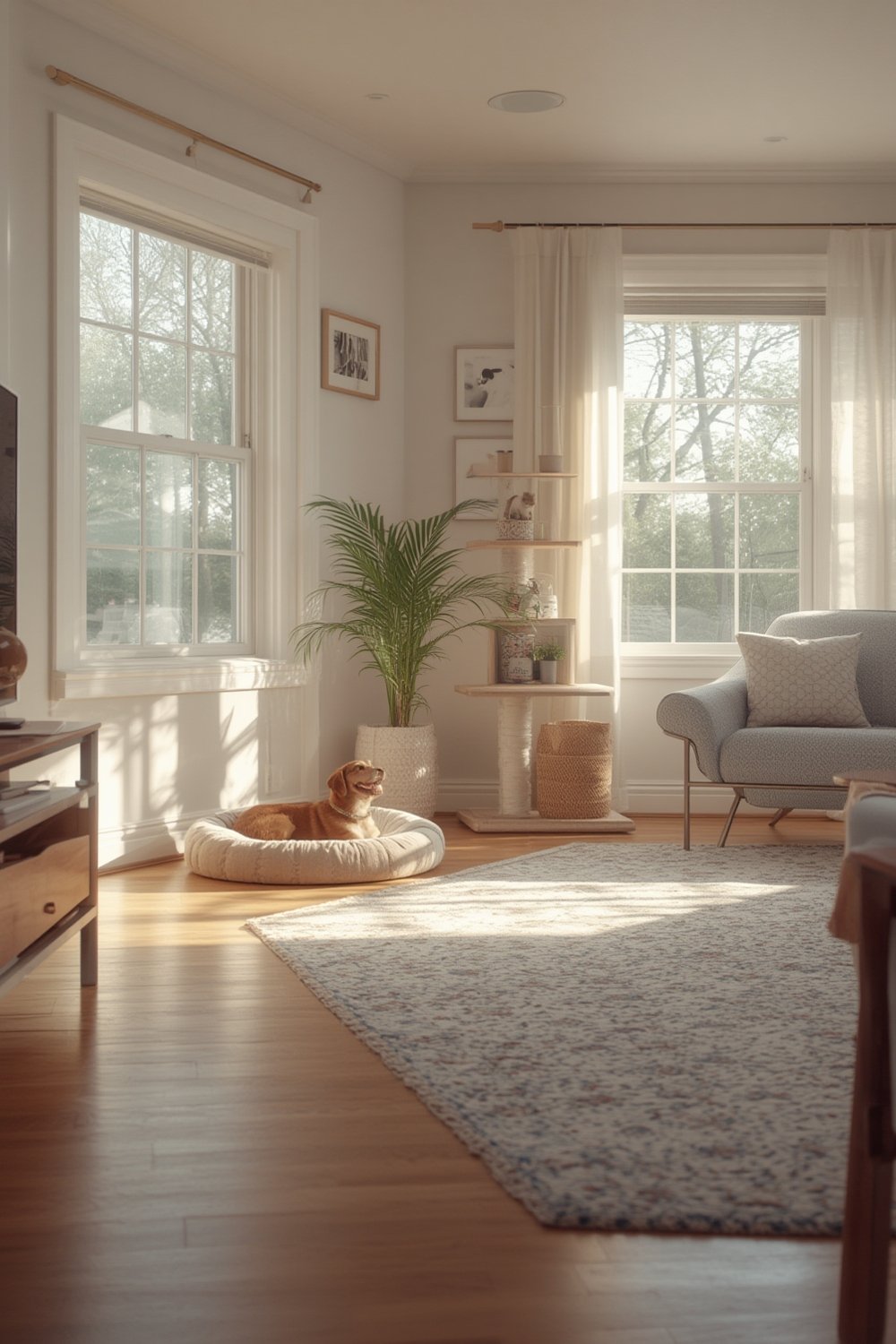
Step-by-step guide: Planning Your Home Modifications
Upgrading your home for both accessibility and pets can be complex, but planning in phases makes it manageable. Here’s how to get it right from the start:
- Define your goals and pain points. Are you worried about dog claws on floors, tripping over water bowls, or struggling to bathe your pet? List out every daily challenge.
- Audit your current space. Note flooring wear, slippery spots, difficult transitions (thresholds, steps), and clutter from pet supplies. Photograph trouble zones for reference when talking with contractors.
- Budget realistically. Itemize wish-list features. For example, luxury vinyl plank (LVP) flooring costs roughly $4.00–$7.50 per square foot installed, while a basic dog washing station runs $1,000–$2,500 (higher-end stations can reach $4,500+ with custom tile and plumbing). Built-in pet feeding stations typically range $600–$1,500. Pet door installation runs $200–$700 for a manual door, and $900–$2,500 for a smart model (installation in walls or glass doors adds complexity and cost).
- Research materials—demand documentation. Select pet-proof flooring with high scratch-resistance ratings (AC4/AC5 wear class for laminates, PEI 4+ for tile), and a COF (Coefficient of Friction) of at least 0.42 for slips. Ask for product data sheets and explicitly check if the warranty covers (or excludes) pet damage.
- Plan smart layouts for accessibility. Prioritize open movement, lever handles, clear walkways, and nothing that blocks wheelchairs or walkers. Position pet care features (wash station, feeding, sleeping areas) so they don’t require repetitive bending.
- Line up your professionals. Gather at least three written bids. Only hire licensed, insured pros familiar with both universal design and pet modifications. Ask detailed questions about: subfloor prep, plumbing/electric relocation for dog wash or feeding stations, experience with pet door installation in exterior walls or sliders, and whether their work complies with ADU/aging-in-place code where required.
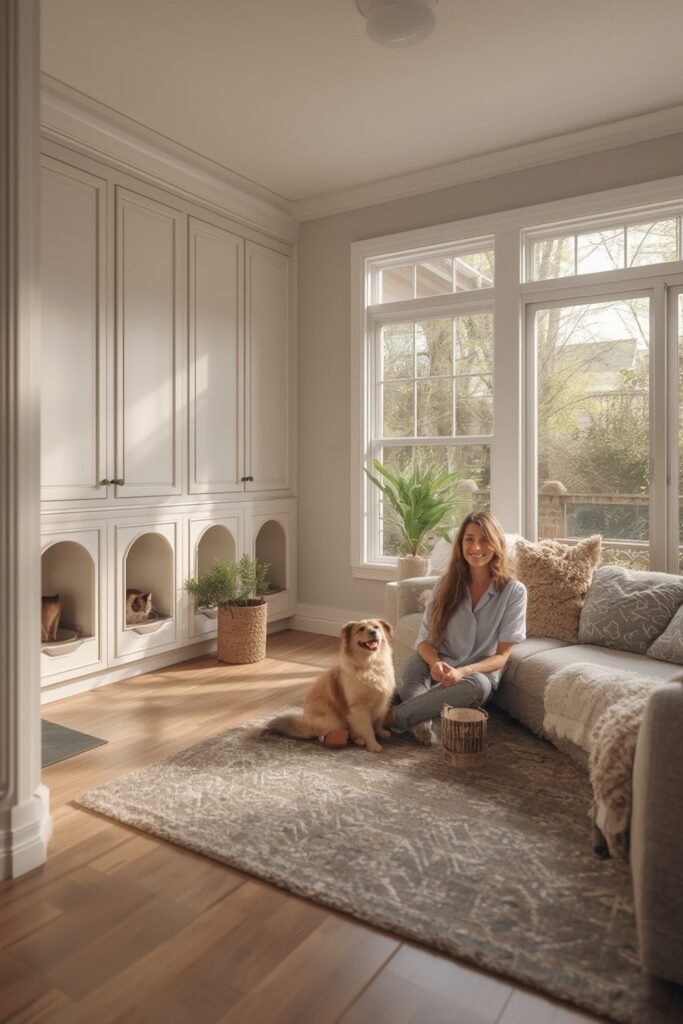
What to Demand on Specs and Warranty
- For pet-proof flooring, insist on manufacturer-documented scratch resistance (e.g., AC4+ for laminate/LVP, 20mil+ wear layers, PEI 4+ for porcelain tile).
- Slip resistance: ASTM D2047 or ANSI A326.3 tested, with a wet/dry Coefficient of Friction of 0.42 or greater.
- Water-resistance: Confirm “waterproof” versus “water-resistant.” For busy homes with pets, 100% waterproof (like SPC) outperforms even best-in-class LVP or engineered hardwood in wet zones.
- Warranty: Read the fine print — many “lifetime” floors exclude pet accidents, scratches, or water intrusion from animals, so clarify before you buy.
Built-In Pet Stations and Barriers
- Dog washing station: Look for slightly raised platforms (18–22 inches) to reduce bending, with handheld shower and thermostatic-mixing valves for comfort. Touchless or lever controls are easier for aging hands.
- Pet feeding station: Recessed bowls prevent spills and tripping. Plumbing in filtered water lines (with an accessible shutoff) can boost convenience for both pets and owners.
- Pet doors: Seek insulated, self-sealing models with electronic locks or microchip sensors for added security. Wall or sliding glass installs will almost always need professional assessment for code/waterproofing, so expect higher cost; door panel installs are more DIY-friendly.
Advanced Analysis & Common Pitfalls
Even high-end pet-friendly home modifications can disappoint if installed or maintained poorly. These are the most common complaints reported by real homeowners and contractors:
| Flooring Type | Durability | Scratch Resistance | Slip Resistance | Pet Owner Complaints | Budget Range |
|---|---|---|---|---|---|
| Luxury Vinyl Plank (LVP) | Excellent | AC4–5, 20+ mil wear layer | Good if textured (>0.42 COF) |
Wear in high-traffic, slippery when wet, vulnerable to heat/sun | $4–$7.50/sq. ft. installed |
| SPC Rigid Core Vinyl | Superior | High | Textured is best | Can sound hollow; joints may trap hair | $5–$9/sq. ft. installed |
| Porcelain/Ceramic Tile | Outstanding | PEI 4+ | Slip-resistant if matte or textured | Cold, hard underfoot; grout absorbs stains; can be noisy | $10–$20/sq. ft. installed |
| Engineered Hardwood | Good (if top coating is tough) | Varies by topcoat | Satin finish helps | Prone to scratches; needs recoating; water can damage seams | $8–$15/sq. ft. installed |
| Laminate (Waterproof) | Good for moderate use | AC3–4 rating | Varies; textured better | Edge swelling if wet; click joints collect debris; not silent | $3.50–$7/sq. ft. installed |
| Sealed Concrete | Superior | High if sealed well | Slippery when sealed smooth | Cold, hard, needs rugs for comfort; cracks may appear over time | $3–$10/sq. ft. installed |
Homeowner and contractor forums routinely mention these issues:
- Seams or click-together joints of vinyl/laminate trapping fur and debris (especially with medium and long-haired breeds).
- “Scratch-resistant” does not equal “scratch-proof”—deep gouges can occur from active dogs or dropped items. Check raw lab data before believing the marketing.
- Some pet-proof flooring is too slippery or too hard for aging pets—choose textured styles, add non-slip rugs, or use pet-specific floor coatings.
- Installer shortcuts can void warranties and lead to early failure. For all water-bearing pet features (pet doors, dog wash), improper waterproofing or lack of flashing leads to leaks and hidden costs.
- Upgrades like built-in feeding stations that aren’t planned with accessibility in mind can actually create new tripping hazards or be hard to reach for owners with reduced mobility.
For a deeper look at how sound-dampening, water resistance, and warranty terms play out in real-world installs, see our detailed guide on pet-friendly home modifications. Also, for flooring innovation, refer to the 2025 LVP trends and the rapid growth of SPC flooring.
Conclusion
Investing in pet-friendly home modifications brings years of smoother living for both you and your furry companions, especially if you plan ahead and focus on products with real performance data and accessibility design. Choose upgrades that address both durability and safety up front, budget for professional installation where needed, and demand technical specs/warranty in writing to safeguard your investment.
Ready to upgrade? Start with vetting local pros for pet-proof flooring or smart pet door. Download a checklist, get three itemized bids, and insist on accredited products with published slip/scratch data. Taking these direct steps ensures every dollar works hard for your home’s safety, cleanliness, and long-term peace of mind—exactly what the best pet-friendly home modifications are meant to do.
FAQ
What is the best pet-proof flooring for aging-in-place homes?
Luxury vinyl plank (LVP) and SPC rigid core flooring offer the best combination of durability, scratch resistance, and slip prevention. Choose textured finishes and demand waterproof construction. Porcelain tile is also excellent for wet zones if slip-resistant and paired with underfloor heat for comfort.
How much does a dog washing station cost to install?
A basic dog washing station typically runs $1,000–$2,500 installed, while premium custom-tiled stations with upgraded plumbing can cost $3,500–$4,500 or more depending on location and finish level.
Do pet modifications increase home value?
Yes, particularly if they are well integrated with aging-in-place and universal design principles. Pet-proof flooring, built-in feeding/washing stations, and smart pet doors are increasingly attractive to buyers looking for a low-maintenance, future-proof home.
What technical specifications should I ask for to ensure durability?
Request AC4 or higher wear ratings for laminate/LVP, 20+ mil wear layers, PEI 4+ for tile, wet slip resistance of 0.42+ COF, and explicit warranty coverage for pet damage. Ask each contractor to provide these ratings and a copy of the warranty in writing.
Is it worth paying extra for a smart pet door?
For many seniors, a smart pet door with microchip or collar recognition adds security and reduces the risk of unwanted critters entering. Installation costs more, especially for wall or glass doors, but the improved safety, convenience, and insulation are often worth it in the long run.