
### Blog Post:
Mudroom design ideas aren’t just for sprawling suburban homes. If you live in an urban apartment, condo, or townhouse—especially if you rent or need aging-in-place flexibility—smart entryway storage solutions help banish clutter, save time, and boost home safety. This guide shows you highly practical, renter-friendly mudroom solutions that work even in the tightest spaces, with a special focus on easy organization, no-damage installation, and long-lasting durability.
Key Takeaways
- You don’t need a dedicated room—a compact entryway can become a functional mudroom with the right space-saving ideas and renter-safe solutions.
- 85% of American seniors want to age in place at home, so prioritize durability, safety, and long-term adaptability in your design choices. [Source]
- Printable measurement templates, modular benches, and dual-purpose furniture make installation fast with minimal damage—great for renters and busy city dwellers alike.
- Why a small but smart entryway matters
- Quick assessment checklist — measure, prioritize, and set goals
- Space-saving principles for narrow urban entryways
- Mudroom bench with storage — styles, materials, and renter-friendly options
- Coat rack installation — secure methods and technical tradeoffs
- Shoe storage ideas that work in tight spaces
- Drop zone organization for tech devices and daily essentials
- Renter-friendly and dual-purpose solutions (no-damage installs)
- Durability, brands, and user satisfaction — what shoppers should look for
- Budgeting, timelines, and next steps for busy urban homeowners
- Quick product checklist + downloadable shopping list
- FAQs
Why a small but smart entryway matters
A well-planned entryway isn’t a luxury—it’s a daily difference-maker. Urban dwellers who lack space for a full mudroom can still enjoy the benefits of an organized entry zone, especially with the right mudroom bench with storage ideas. Entryway storage solutions reduce tripping hazards, keep shoes and coats off the floor, and speed up your morning routine. For anyone caring for older relatives, creating a clear, safe, and well-lit entry becomes a real aging-in-place investment. According to USAging, 85% of Americans age 65+ want to remain in their home and community as they age, and a 2025 U.S. News survey reports that 94% of adults 55+ rate aging in place as important [Source]. Practical mudroom upgrades aren’t just about tidiness—they’re about supporting safety, confidence, and independence for every generation.
Quick assessment checklist — measure, prioritize, and set goals
Transforming a compact entry starts with a precise plan. Here’s a quick checklist to set you up for success:
- Measure your floor area and ceiling height: Use a tape measure to capture wall-to-wall width, doorway clearances, and the path of traffic (download our printable measuring template below).
- Traffic flow: Sketch your entry layout—note obstacles, shoe drop spots, and how people enter/exit. Photos help!
- Storage needs: Make a list. Consider how many pairs of shoes, coats, umbrellas, bags, and keys are handled daily.
- Seasonal items: Plan for winter boots, rain gear, or sports equipment that rotates in and out.
- Tech & drop zone: Do you need a dedicated space for charging phones, storing keys, or sorting mail?
- Accessibility: Anyone in your household with mobility issues? Prioritize seating height, railings, and clear walkways (64% of seniors list aging-in-place access as a top social risk). [Source]
Once you’ve mapped your space and needs, set 1-2 clear priorities (e.g., maximize shoe storage, add a bench for aging relatives, or reduce cluttered drop zones). This laser focus lets you choose products—and avoid overbuying or investing in the wrong features.
Want more tips? Explore our kitchen storage solutions for measurement tricks that work in any room.
Space-saving principles for narrow urban entryways
To get the most from tight quarters, anchor your command-style wall anchors to these proven small-space rules:
- Go vertical: Use tall shelves, hooks, or pegboards to keep floors clear and sightlines open.
- Multifunction furniture: Benches with built-in shoe cubbies or flip-top storage replace bulky standalone pieces (see our top mudroom bench with storage picks below).
- Shallow depth units: Look for entryway storage solutions that are 10″–15″ deep—enough for shoes and baskets but not a tripping hazard.
- Floating vs. built-in: Floating shelves and slim wall hooks offer flexibility, while built-ins deliver maximum storage (but often require landlord approval).
- Optimized sightlines: Keep bins and baskets at shoulder or bench height for easy access by users of all ages.
Typical urban layouts include slender 3-foot wide halls, alcove entries, or compact closets. Adapt these templates:
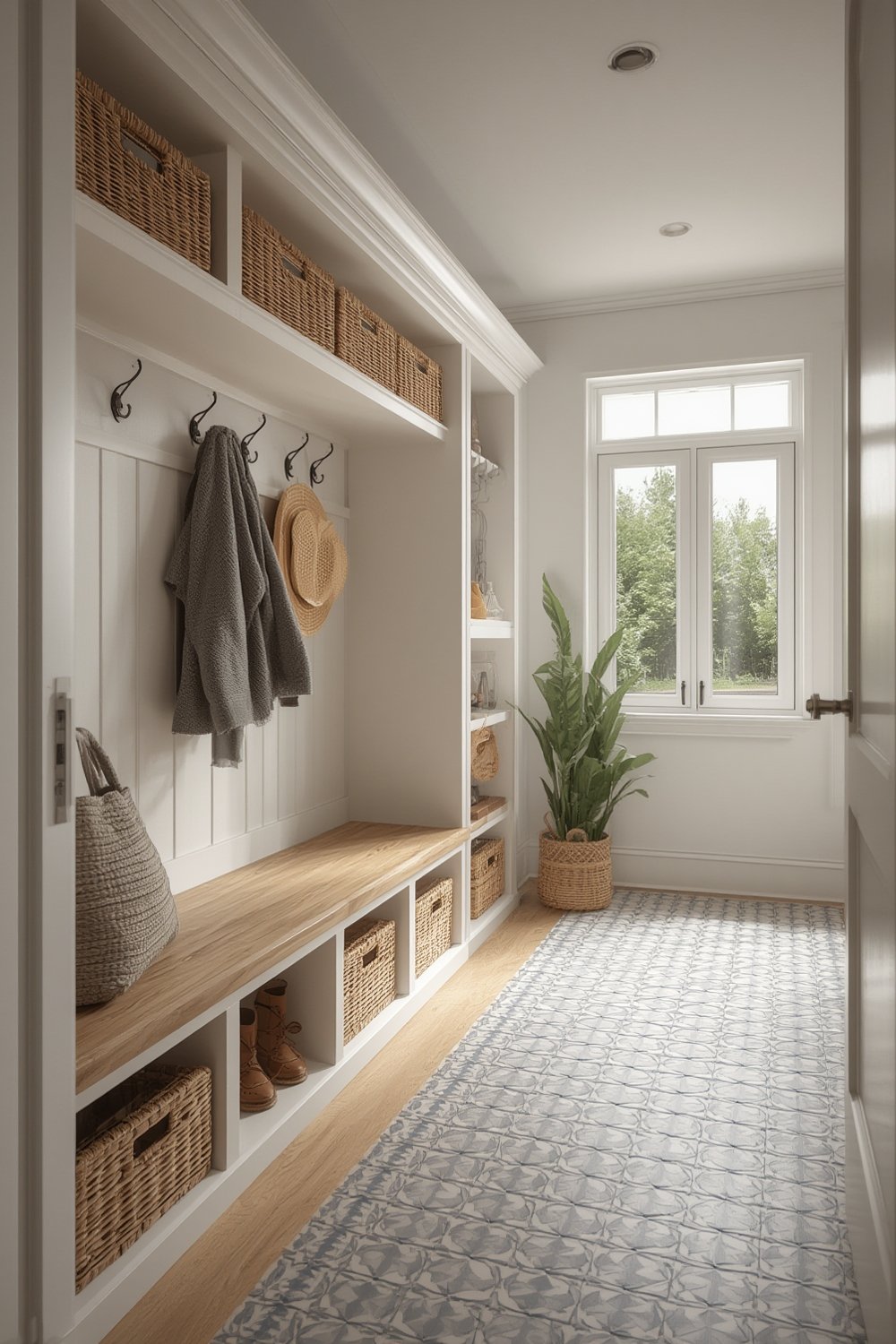
- 3ft Hallway: Use a shallow bench, over-bench hooks, and slim vertical racks on one wall.
- Alcove Entry: Install a floor-leaning rack, floating shelf above, or modular cubbies on either side.
- Alcove with Closet: Reserve closet for coats; use outside walls for drop zone, shoe bins, or a narrow bench to boost accessibility.
Want more space-saving inspiration? See our multi-functional home spaces guide for city-tested layouts and real examples.
Prioritizing these principles supports long-term adaptability—key since 85% of older adults want to remain at home as they age (source). This makes convertible, modular solutions a future-proof investment.
Mudroom bench with storage — styles, materials, and renter-friendly options
The heart of any compact mudroom is a functional bench—with storage. Here’s how to choose:
- Open cubbies: Easy to access, best for frequent shoe changes, but can look cluttered.
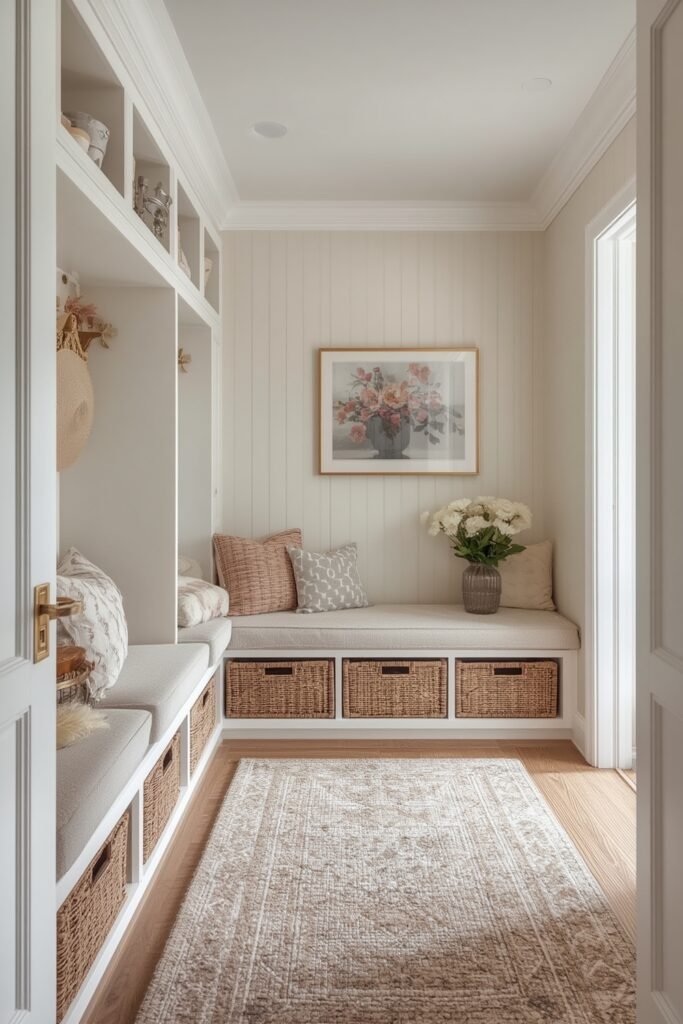
- Hinged-top benches: Hide mess and double as a seat. Check for soft-closing hinges if seniors will use it.
- Sliding drawers: Contain dirt, keep shoes out of sight, but verify runners are smooth and hardy for frequent use.
- Lightweight modular benches: Repositionable and renter-safe, ideal for growing families or multi-generational homes.
Materials matter: Solid wood or high-quality plywood benches last decades but are heavier. Metal frames are strong and modern looking, while composite or laminate benches are more budget-friendly and lightweight (but may scratch or chip over time). Don’t exceed the load rating—most benches support 250–400 lbs (always check manufacturer specs).
Renter-friendly anchoring options include command-style wall anchors, rubber-coated floor-leaning units, and benches with built-in anti-tip straps. These allow no-drill setup and make removal clean and easy. For tips on flooring under benches, visit our SPC flooring guide for durable, waterproof choices.
Cost note: National databases do not track 2024 average installation costs for mudroom benches. Recent local quotes place DIY modular bench kits at $65–$200, midrange hardwood or metal versions at $275–$650, and custom built-ins $1,000–$2,500+ (Source: HomeAdvisor, IKEA, Wayfair contractor referrals; check your local market for specifics). Request a custom mudroom quote using our inline form for precise pricing and help matching your space.
Coat rack installation — secure methods and technical tradeoffs
Racks and hooks keep coats, bags, and leashes off the floor—and your entryway organized. Here’s what to consider:
- Wall-mounted vs. freestanding: Wall mounts save space but require careful anchoring; freestanding racks move easily but take up floor space and may tip if overloaded.
- Stud or anchor mounting: Mount into studs for max strength, or use heavy-duty drywall/plaster/concrete anchors rated for 30 lbs+ (consult packaging specs).
- Hardware and surfaces: Use toggle bolts for plaster or hollow drywall and masonry anchors for concrete. If in doubt, ask a local contractor about your wall material.
- Weight limit: Never exceed the manufacturer’s recommended weight—most racks are rated for 25–40 lbs total (check the product label or ask the brand directly).
Regulatory note: There are no official national specs or licensing standards for coat rack installation. Always follow the hardware and surface requirements listed by the manufacturer. If you rent or have building codes to comply with, check with your landlord or HOA before drilling.
Want hassle-free options? Leaning racks and command-hook rails require no hardware and remove cleanly. For more installation guidance, see our garage organization guide—these tricks work just as well indoors.
Shoe storage ideas that work in tight spaces
Piles of shoes at the door aren’t just unsightly—they cause trips and collect dirt. Try these proven shoe storage ideas for compact urban entries:
- Vertical shoe cabinets: Shallow, flip-down bins hold several pairs without blocking entryways.
- Over-bench pullouts: Drawers or trays under the bench use hidden space and keep dust under control.
- Stackable bins: Clear, handled bins work for off-season or kids’ shoes and slide beneath any seat.
- Ventilation: Choose units with mesh, perforation, or leave space for airflow to prevent odors.
- Low-profile solutions: Wall-mounted shoe racks or angled trays fit behind open doors or in tight niches.
Frustrations & fixes: Recent user reviews on Reddit and Apartment Therapy cite two main pain points—crowded, tipping shoe racks, and odors from closed bins in small apartments. Solve this by never stacking shoes more than two high and adding baking soda packets or cedar inserts for odor control. Rotate out-of-season shoes at least quarterly.
Curious about closet conversions? Visit our aging in place modifications guide for tips on accessible, senior-friendly storage upgrades.
Drop zone organization for tech devices and daily essentials (a competitor gap)
Most mudroom design ideas skip over technology—but every modern household needs a safe, organized place to charge phones, store keys, and sort mail. That’s a true drop zone organizer win.
- Charging stations: Small shelves with built-in cable cutouts or dedicated device drawers keep cords hidden and batteries topped up.
- Cable management: Use adhesive cord clips or wrap cords behind wall-mounted shelves to avoid trip hazards.
- Device pockets: Fabric organizers or baskets affixed inside cabinets hold phones and tablets away from spills and dust.
- Key trays & mail sorters: Wall-mounted or benchtop options keep everyday items at arm’s reach.
- Quick-grab baskets: Use labeled bins for outgoing mail, sunglasses, or headphones—especially helpful in multi-generational homes.
Material tip: Look for products with smooth, easy-clean finishes, and integrated cord channels to safeguard electronics. Powered benches with built-in sockets are increasingly available—if you rent, try a freestanding organizer with USB hubs that plugs into a nearby outlet and needs no drilling. Consumer Reports notes higher user satisfaction with entry stations that hide mess and protect devices from drops.
Want more high-tech home ideas? Dive into our smart home technology installation guide for flexible, future-ready solutions that integrate seamlessly into small spaces.
Renter-friendly and dual-purpose solutions (no-damage installs)
Urban renters need entryway upgrades that are easy to return to original condition. Here’s what works:
- No-damage mounting: Use heavy-duty adhesive strips, removable command hooks, and floor-leaning racks. Just ensure surfaces are clean and follow removal instructions for zero residue.
- Freestanding modular systems: Cubby benches, tower racks, and adjustable shelving units can be moved or reconfigured as needs change.
- Adhesive and hook alternatives: For coat hooks and baskets, large-capacity command hooks (rated for 8–10 lbs each) work on most painted, sealed surfaces and remove without holes.
- Convertible furniture: Stools and ottomans with storage serve as shoe bins, side tables, or even extra seating in a pinch.
- Temporary built-ins: Many systems advertise tool-free setup with pressure mount posts—just be sure to check the manufacturer’s maximum load and warranty.
2024 tested picks: Tenant-favored brands (IKEA “Trones” shoe cabinets, Yamazaki freestanding racks, and 3M Command Heavy Duty hooks) get top performance ratings and easy return/removal reviews. Installation averages 10–30 minutes per unit. Pro DIY hack: Place a strip of painter’s tape under command hooks for even easier, mark-free removal.
For more on dual-purpose living, check out our multi-functional home spaces guide.
Durability, brands, and user satisfaction — what shoppers should look for
For longevity, focus on materials, joinery, and real user feedback:
- Materials: Opt for solid wood, powder-coated steel, or high-density laminate for heavy-use zones. Avoid thin particleboard unless weight loads are low.
- Joinery and hardware: Benches with dowels or metal fasteners outlast basic screw-only designs. Look for at least a 1-year manufacturer’s warranty; top-rated models offer 3–5 years.
- Top brands/models: Based on 2025 market reviews from Wirecutter and Consumer Reports, best-in-class models include the IKEA “Hemnes” bench, Yamazaki “Tower” line, and Prepac’s wall-mounted cubbies (check for region-specific availability).
- How to vet reviews: Scan for feedback 6+ months after purchase; filter by users with similar layout or rental needs. Prioritize mentions of hardware durability, finish wear, and ease of moving/removing units.
For more advice, see our flooring durability guide—the same quality signals apply to every heavy-use zone!
Budgeting, timelines, and next steps for busy urban homeowners
Stay efficient with this simple prioritization plan:
- Essentials matrix: Place safety, clear walkways, and basic storage first. Upgrades like custom cabinetry, integrated lighting, or specialty seating can come as budget and time allow.
- Timeframes: DIY modular installs: 1–2 hours. Tool-free upgrades (hooks, baskets): 20–45 minutes. Contractor built-ins: 1–2 days on average (always verify with a local quote).
- Budget tiers:
- Economy: $50–$200 for basic shelf, hook, and bench setups
- Midrange: $250–$700 for modular systems or multi-purpose units
- Premium/custom: $1,000–$2,500+ for built-ins or specialty furniture
- Action plan: 1) Measure (with our downloadable template), 2) Choose renter/renter-friendly products, 3) Install in quick, manageable steps.
No national cost data exists for 2024 mudroom installations—always check your local contractor listings for current rates or request a quote using our custom form below to get regionally specific advice tailored to your entryway style.
Quick product checklist + downloadable shopping list
Download our full printable checklist below, then shop smart with these tips:
- Essential dimensions: Floor width, depth, and ceiling height
- Hardware: Anchors (command strips, toggle bolts, pressure posts as suitable)
- Surface finish: Matte, wipeable finishes for easy care
- Curated buy list: Lightweight modular bench (250+ lbs), removable coat hooks, vertical shoe rack (capacity 8–10 shoes), drop zone organizer with charging, and an aging-friendly bench height (17–19″)
Reminder: 85% of seniors want to remain at home—so include at least one aging-friendly, anti-tip, or soft-close product on your list (source).
Download the Measuring Template (PDF) |
Download the Shopping Checklist (PDF)
Conclusion
Don’t let a lack of space or rental limits hold you back—a functional mudroom is within reach for any entryway. With the above mudroom design ideas, you can create an organized, adaptable, and safe drop zone on any budget and timeline. Download our free measuring guide, grab your shopping checklist, and transform your entry today. Need a custom solution? Request a mudroom quote and one of our pros will help you design a setup tailored for your space.
FAQs
Can I install a mudroom bench with storage in a rental?
Absolutely. Look for modular benches and tool-free anchoring (command strips, floor-leaning units, or pressure-fit shelves). Make sure to follow all removal guidelines to avoid wall damage—great for apartments or condos.
What is the average cost to add mudroom storage in a small entryway?
DIY setups typically run $65–$700, depending on size and materials. Custom built-ins can range from $1,000–$2,500+. Costs vary widely by region—get a few local quotes or use our instant request form for a tailored estimate.
How difficult is coat rack installation on plaster or concrete walls?
It’s moderately challenging compared to drywall. Use toggle or masonry anchors rated for your wall type and weight load. Consider removable, leaning, or adhesive solutions for true no-damage, renter-friendly results if you’re unsure about the wall structure.
How can I organize tech devices and mail in my entryway?
Choose a drop zone organizer with hidden cable channels, USB hubs, mail sorter slots, and compartments for keys or chargers. Modular shelves with built-in charging or fabric pockets work well for devices in any small entry.
Are these mudroom design ideas suitable for aging-in-place or seniors?
Yes. Prioritize anti-tip benches, easy-access hooks, shallow-depth storage, and non-slip rugs. Many solutions are durable, modular, and require little or no installation, making them ideal for both seniors and caregivers.