

Moisture barrier installation is an essential shield that every homeowner—especially those committed to safe aging in place—should understand. When crawl spaces and basements are left exposed to unwanted moisture, the risks go far beyond musty smells and visible leaks. They quietly threaten your indoor air quality, the structural health of your home, and ultimately your peace of mind for years to come.
Key Takeaways
- Proper moisture barrier installation and crawl space encapsulation directly protect indoor air quality, prevent mold, and reduce risk for older adults and those with respiratory issues.
- Common DIY pitfalls can worsen moisture problems and may lead to costly repairs, unsafe conditions, or code violations—know when to hire a pro.
- Documenting all work, inspections, and performance metrics (like pre/post moisture readings) increases ROI, supports insurance claims, and helps with future resale.
- Why moisture barrier installation is critical for homeowners — and especially for aging-in-place
- Step-by-step: How to approach moisture barrier installation and crawl space encapsulation
- Advanced analysis & common pitfalls: What homeowners must watch for
- Summary & next steps
- Frequently asked questions
Why moisture barrier installation is critical for homeowners — and especially for aging-in-place
Moisture problems in crawl spaces and basements pose real threats that go beyond occasional odors or visible dampness. Excess humidity, condensation, and water intrusion encourage rapid mold growth and wood rot, weakening your home’s foundation and putting your family’s health at risk. For older adults—or anyone with asthma, allergies, or reduced immunity—the impact of mold spores and poor indoor air quality is magnified, leading to chronic issues or even hospitalization.
Crawl space encapsulation and professional-grade moisture barrier installation keep subfloor humidity out of living spaces, prevent mold before it starts, and reduce ongoing repair or replacement costs. According to recent research, 85% of those age 65 and older want to remain in their home and community as they age. Investing in effective moisture control is a smart step to ensure both health and accessibility as you or your loved ones age in place.
In fact, controlling crawl space and basement moisture is foundational for all accessible home upgrades—such as grab bars, low-threshold showers, and bathroom retrofits—by ensuring these investments aren’t undermined by future moisture or mold-related repairs.
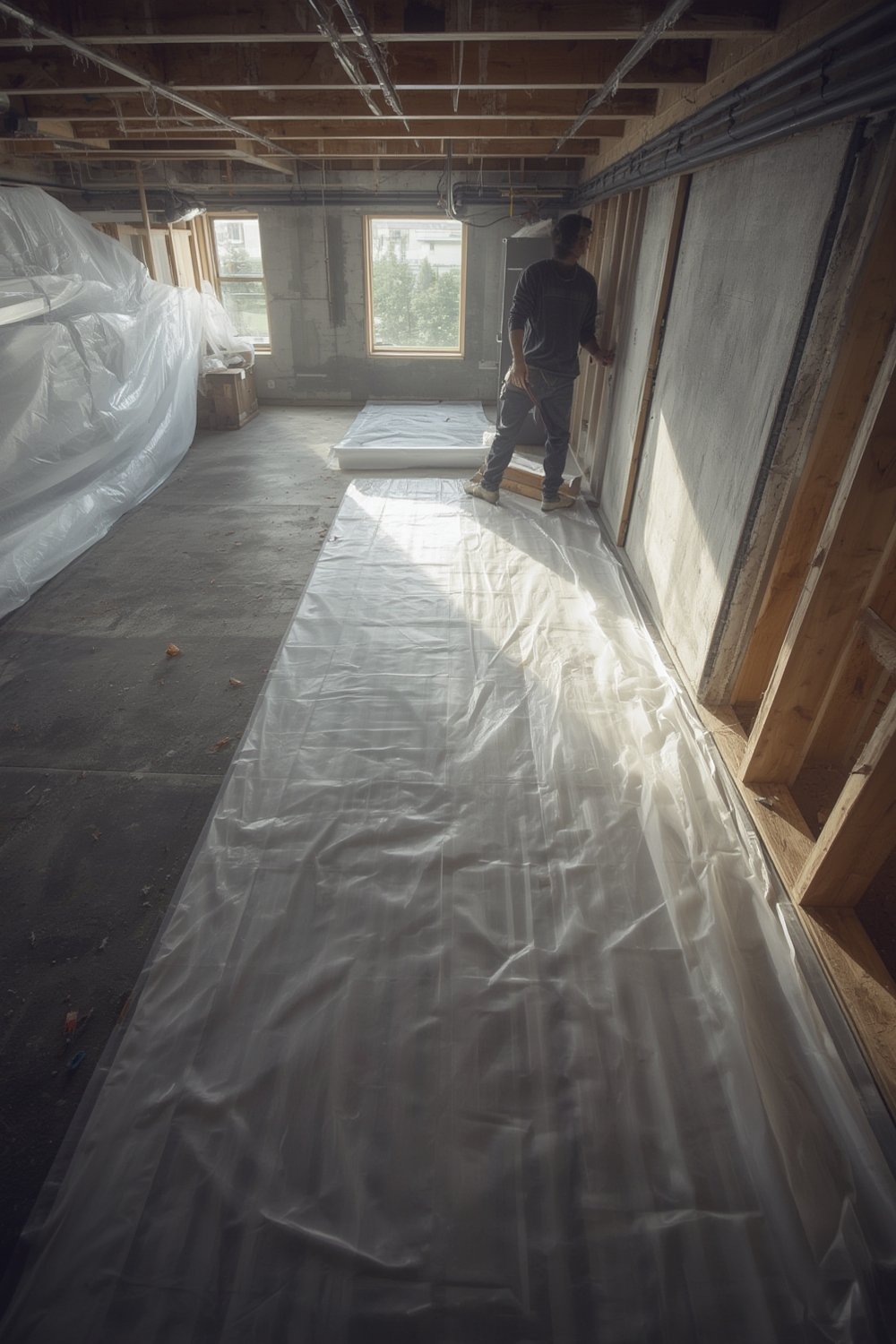
Step-by-step: How to approach moisture barrier installation and crawl space encapsulation
Before you start, know that a successful vapor or moisture barrier installation requires careful assessment, correct material choices, and scrupulous attention to details like seams, penetrations, and drainage. Below is a proven workflow to help you or your contractor get it right.
- Assess your foundation and moisture sources: Inspect for standing water, seepage, musty odors, visible mold, wall efflorescence, and high relative humidity. Use a hygrometer or moisture meter. Note: Roof leaks, poor grading, or gutter problems must be fixed first.
- Choose your system: Decide between basic vapor barrier installation (poly sheeting on crawl space/basement floors and walls), full crawl space encapsulation (sealed, insulated walls and floors with mechanical dehumidifier), or waterproofing upgrades (like sump pump installation and drainage systems).
- Address drainage and ventilation: Install perimeter drains and a sump pump, if needed, before putting down any membrane. Ensure there is a plan for safe routing of water discharge and sufficient ventilation (or permanent dehumidification) per local code.
- Prepare the surface: Clear debris, sharp objects, and organic material; fill in low spots; and ensure all contact surfaces are level for good adhesion or laying of membrane.
- Install the moisture barrier: Overlap edges 6–12 inches, tape seams with prescribed tape, run the membrane several inches up the walls, and anchor or seal the perimeter. Seal all penetrations (piers, footings, pipes) with compatible vapor barrier tape or spray foam. For advanced encapsulation: insulate walls and install a mechanical dehumidifier if the space is intended to be unvented.
- Inspect and test: Check for gaps, seam failures, or leaks. After heavy rain, monitor humidity, moisture readings, and ensure the drainage system works as intended.
What the data does—and does not—tell us about moisture control
National data tying specific moisture barrier installation methods to reductions in mold incidents, structural repairs, or health outcomes is sparse. As reported in 2025 research, “The provided search results do not address most of your specific investigative questions regarding … moisture-related damage, complaint patterns, competitor analysis, or ROI metrics.” Rely on high-quality local contractor reviews, insurance claims data, and manufacturer technical sheets for up-to-date, actionable input on expected outcomes and cost-effectiveness for your region.
Advanced analysis & common pitfalls: What homeowners must watch for
Done wrong, vapor and moisture barrier work can trap moisture, increase water intrusion, violate code, or even make indoor air quality worse. Here’s the plain truth about what goes wrong—straight from real-world complaints and contractor call-backs:
- Seam and nailing failures: Inadequate overlaps or use of non-approved tape can fail after the first season, letting in outside air and moisture.
- Poor surface prep: Skipping debris removal leads to punctures and air gaps, making the whole system ineffective.
- Missing bulk water fixes: Not fixing roof leaks, grading, or gutters means water will continue to collect, pooling beneath even the best barrier.
- Trapped humidity: Improper ventilation or missing dehumidification creates humid, moldy conditions even after encapsulation.
- Incompatible materials: Not all tapes, foams, or membranes play nicely—wrong pairings can delaminate or let vapor through.
- HVAC/blower issues: Encapsulation can change the air balance in your house. Not adjusting or integrating the HVAC (or installing a dehumidifier) leads to poor results.
- Permit/code failures: Using plastic below minimum thickness, skipping permanent dehumidification, or improper sump discharge can mean failed inspections—or worse, insurance denials after a loss.
Performance comparison: Common vapor barrier materials & systems
| Material/System | Good For | Typical Lifespan | Vapor Transmission (Lower is Better) | Puncture Resistance | Integration/Notes |
|---|---|---|---|---|---|
| 6 mil Polyethylene Sheeting | Basic crawl space floors; budget projects | 5-10 years | 1.0 perm | Low | Must overlap seams, vulnerable to tears. Best for low-traffic spaces. |
| 12-20 mil Reinforced Membrane | Encapsulation, moderate-to-high humidity, light maintenance | 10-20 years | 0.05-0.10 perm | High | Best for long-term, accessible spaces. Some systems include antimicrobial layers. |
| Spray-applied Membrane | Irregular surfaces, wall/floor transitions | 10+ years (if installed properly) | 0.03-0.10 perm | Variable | Requires professional equipment. Hard to DIY. |
| Insulated Encapsulation Systems | High-efficiency, conditioned crawl spaces | 15-25 years | <0.01 perm | Very High | Includes rigid insulation, sealed seams, and dedicated dehumidification. Expensive up front but significant energy savings and comfort for aging-in-place homes. |
Note: “The provided search results do not contain data on average costs for specific modifications, nor do they include information about … technical specifications.” For this reason, always request product spec sheets and ask contractors for material certifications and test results.
Cost expectations and financing guidance
- Moisture barrier installation (basic): $2,200–$5,000 average, varies by region and square footage.
- Crawl space encapsulation (premium, insulated, with dehumidifier): $7,000–$17,500+
- Basement waterproofing/drainage: $4,000–$15,000+
- Sump pump installation: $2,500–$5,500
Local costs fluctuate; seek multiple written estimates. Many contractors now offer financing. More than 35% of older households spend over a third of their income on housing, so factor in both upfront costs and long-term savings in medical expenses and future repairs. Ask about tax incentives or state home modification grants for seniors.
For more detailed numbers, consult your state’s trade association, local utility company rebates, and get transparent contractor quotes that separate material and labor costs.
Compliance, permitting, and code pitfalls
Common mistakes that can compromise your entire project include:
- Using non-code-compliant vapor barriers (minimum 6 mil; some regions require 10–12 mil)
- Omitting required ventilation or dehumidification when encapsulating a crawl space
- Improper sump pump discharge (must direct water away from foundation and neighboring properties)
- Lack of permits for any major structural or drainage modifications
Building codes change frequently. The data confirms: “The provided search results do not contain specific technical specifications for … certification.” Always confirm with local building officials and insist that any pro you hire shows permit receipts and relevant certifications.
Three hidden issues most guides ignore
- HVAC integration: Sealing up your crawl space alters airflow. Plan for how this will impact your existing heating/cooling equipment, and ask about adding or resizing returns or supply lines—or dedicated dehumidifiers. Get it in writing.
- Long-term maintenance and warranty: Set realistic expectations for inspection needs (typically annual) and what is (and isn’t) included in the warranty. Keep records of humidity/moisture readings.
- Sequencing and whole-house water management: Moisture barriers aren’t a fix for bad gutters or poor exterior drainage. Address all sources of bulk water (roof, yard grading, surface run-off) first. Document these upgrades for future resale or insurance claims.
Competitor articles rarely mention these integration factors. Use this as a checklist to gain a real, lasting ROI.
Summary & next steps
Moisture barrier installation and crawl space encapsulation aren’t just preventative maintenance—they’re foundational to protecting your health, investment, and the ability to safely age in place. Here’s a simple action plan:
- Schedule an inspection with a certified moisture or indoor air quality professional—ideally with experience in basement waterproofing and energy-efficient home upgrades.
- Get 2–3 written estimates that clearly separate materials, labor, system type, and include manufacturer spec sheets.
- Document everything: pre/post moisture readings, invoices, and photos—crucial for insurance, resale, and peace of mind.
Struggling with budget? Over 17 million seniors are low income. Explore state or local grants, low-cost loans, and ask your contractor about phased work or financing options. Any step you take towards moisture barrier installation is progress toward a safer, healthier, and more resilient home.
Frequently asked questions
Is moisture barrier installation DIY-friendly, or should I always hire a pro?
For small, accessible crawl spaces with minor dampness, a basic poly vapor barrier can be installed DIY with careful prep. Larger jobs, high humidity levels, or signs of standing water, rot, or mold require professional assessment—and likely professional installation. Always check local codes. Most major encapsulation and basement waterproofing projects are best left to qualified contractors.
How do I know if my crawl space needs a vapor barrier or full encapsulation?
If you see persistent humidity, musty odors, or mold, or if you have a history of flooding, a vapor barrier is a minimum. Full encapsulation is ideal if you want to finish the space, improve energy efficiency, or fully eliminate outside air, pests, and long-term mold concerns.
What’s the difference between a vapor barrier and moisture barrier?
The terms are often used interchangeably, but technically, a vapor barrier stops vapor (humidity) from passing through surfaces (like crawl space floors or basement walls), while a moisture barrier may also stop bulk water. Material quality, thickness, and correct installation are more important than labeling—ask for specs and certifications from your contractor.
How much does vapor barrier installation cost in 2025?
Expect $2,200–$5,000 for basic crawl space vapor barriers, $7,000–$17,500 for insulated encapsulation with dehumidification, and $4,000–$15,000+ for basement waterproofing and drainage systems. Always get at least two quotes and consider any state/local financing or grant programs if on a fixed income.
Can proper encapsulation lower my energy bills?
Yes. Sealing off crawl spaces and controlling humidity can reduce HVAC run times, prevent duct losses, and make floors/rooms feel warmer in winter and cooler in summer—especially when combined with insulation upgrades. Track your utility bills and keep documentation for proof.