

Heated bathroom floors are becoming the must-have upgrade for comfort-driven homeowners seeking a luxury feel and practical improvements for aging in place. Whether you’re remodeling for wellness, resale value, or safer living, this guide breaks down costs, tradeoffs, and essential details most guides skip, so you can decide if radiant floor heating is right for your bathroom remodel.
Key Takeaways
- Heated bathroom floors provide high comfort, safer surfaces for seniors, and add real value to a home—but require careful planning for cost and compatibility.
- Choosing between electric and hydronic systems affects installation complexity, operating cost, and the best system for your specific remodel.
- Model real ROI, ask for clear cost breakdowns, and prioritize modern thermostats to maximize both daily enjoyment and project payoff.
- Why heated bathroom floors are a smart investment for comfort and aging in place
- How to plan and install heated bathroom floors — Step by step
- Advanced analysis — Real complaints, pitfalls, and how to avoid them
- Conclusion
- Frequently Asked Questions
Why heated bathroom floors are a smart investment for comfort and aging in place
Heated bathroom floors deliver immediate luxury—no more shock from cold tiles on winter mornings or fumbling with noisy space heaters. But beyond comfort, they support a bigger priority: helping you stay in the home you love. For older adults and anyone planning long-term, radiant floors reduce slip risk by keeping surfaces consistently warm and dry, minimizing condensation.
Data shows 85% of adults 65+ want to remain in their homes as they age,[1] and 77–88% of adults 50+ prefer aging in place.[2] Heated bathroom floors, as part of aging in place modifications, deliver safety and independence, making them both a luxury feature and a critical investment.

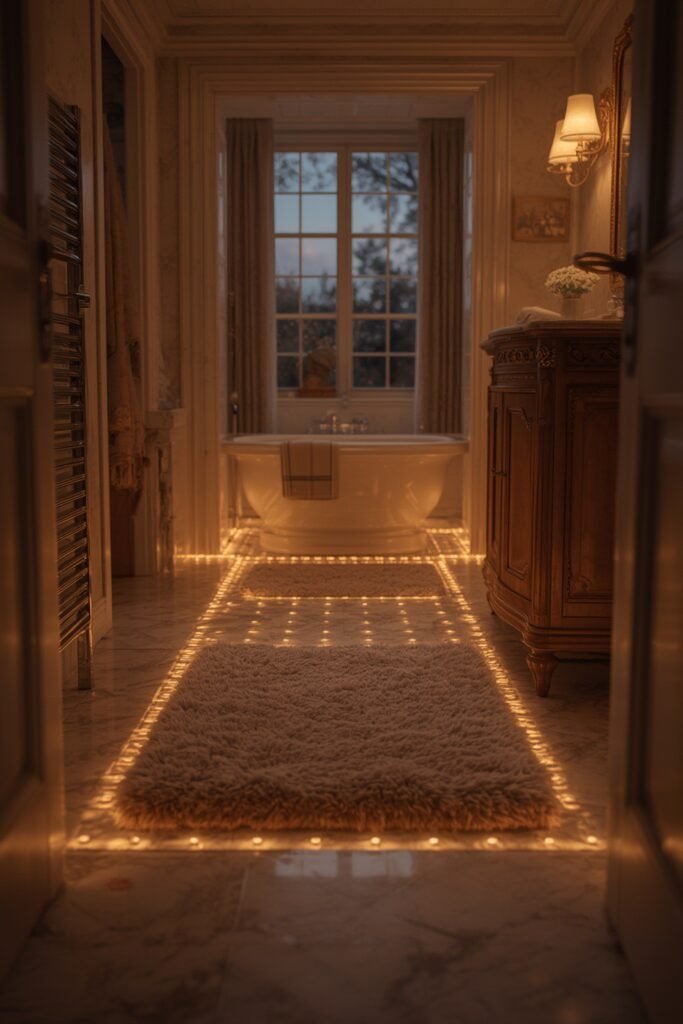
With radiant floor heating, homeowners enjoy warm tiles and a spa-like feel every day (see the spa bathroom features guide). This upgrade often delivers higher resale value—especially as safety and comfort become critical for future buyers—and it works seamlessly with modern bathroom heating options.
How to plan and install heated bathroom floors — Step by step
Planning your heated bathroom floor is all about balancing system type, bathroom size, existing construction, and ongoing energy costs. Here’s the streamlined process:
- Assess your bathroom and goals. Small baths or powder rooms are often best suited for electric mats because it’s thin and simple to install. For larger primary bathrooms, consider hydronic radiant floor heating if you already have a boiler, especially for new builds.
- Confirm floor compatibility. Heated tile installation is easiest over ceramic, porcelain, or SPC flooring (see SPC flooring benefits). LVP can work with electric systems, but not all products are compatible. For best results, coordinate with your flooring supplier—this can prevent costly callbacks.
- Choose your system. Electric mats/cables are ideal for retrofits with minimal floor height change. Hydronic tubing provides efficient whole-house heating but demands more upfront labor and thicker buildup, typically fitting new bathrooms or major renovations.
- Get current installer quotes. Request quotes from at least two licensed professionals (installer interviews are crucial, since price ranges vary by region). Your quote should include: system cost, insulation/coupling membrane, thermostat (choose one with smart, adaptive features), electrical or boiler labor, subfloor prep, and contingencies.
- Apply for permits and plan the project timeline. Most jurisdictions require electrical (sometimes plumbing) permits for radiant floor heating. Confirm with your contractor who will handle inspections and warranty—for peace of mind during aging-in-place upgrades.
- Schedule the work strategically. Heated tile installation must occur before flooring is laid—coordinate with other trades, and expect 1–3 days added to your remodel. For warranty protection, make sure professionals handle electrical or hydronic connections.
For homeowners focused on ROI as well as comfort, compare energy savings to your baseline heating costs. Radiant bathroom heating warms the room faster and more evenly, which can save up to 15% on supplemental heating when modeled under average U.S. energy rates (always check local figures).
Don’t forget to download the homeowner’s contractor checklist and the sample cost estimator below to streamline your quoting process and avoid common mistakes.
Advanced analysis — Real complaints, pitfalls, and how to avoid them
While heated bathroom floors earn high comfort scores, they come with tradeoffs. Homeowners frequently cite these pain points—most can be avoided with planning, clear communication, and verified contractor experience:
- Installation delays: Often caused by permit issues or floor buildup not being factored into the initial timeline.
- Height changes: Even electric systems add 1/8 to 1/2 inch. Verify total “floor buildup” with your installer so doors and trim fit seamlessly. SPC or LVP flooring users should check product-specific heat tolerances.
- Thermostat/user confusion: Modern thermostats are powerful but require smart programming. Insist on an easy-to-use interface and training during installation (see smart home thermostat installation tips).
- Cost overruns: Beware of low “per square foot” quotes that ignore electrical upgrades, floor insulation, or permit fees. Always request a line-item estimate and ask if unexpected changes have driven up past projects.
- Repair access: Hydronic systems may require floor access for future leaks; electric mat repairs can be invasive unless planned with spare mats or mapped cable routes.
- Incompatible subfloors: Some systems do not work well over old slab or wood substrates without special prep. This is especially important for pre-WWII homes or bathrooms that have seen previous water damage.
- Uneven heating/”cold spots”: Poorly spaced cables or tubing—plus missed insulation—lead to annoying variations. Use manufacturer layouts as a benchmark and insist on a documented installation plan.
| Issue | Electric | Hydronic |
|---|---|---|
| Retrofitting ease | Best (thin, can go over most subfloors) | Challenging (requires more height & planning) |
| Response time | Fast (20-45 min) | Slow to medium |
| Upfront cost | Lower ($10–$20/sq ft installed) | Higher ($13–$35/sq ft installed) |
| Operating cost* | Higher | Lower (with high-efficiency boiler) |
| Maintenance | Minimal | May require occasional servicing |
*Estimates vary; model using your utility’s electric and gas rates for accurate ROI.
Local installer feedback and bathroom accessibility best practices are especially valuable due to gaps in national statistics.[3] No 2025 U.S. data exists for senior-specific home heating modifications—this makes primary quotes and homeowners’ real stories essential when planning your own project.
Downloadable: Homeowner’s Heated Bathroom Floor Checklist
- System type and compatibility verified (electric/hydronic) ✔
- Flooring material warranty and temperature rating checked ✔
- Thermostat model with floor temperature sensor specified ✔
- Line-item cost breakdown obtained from at least two installers ✔
- Electrical and plumbing upgrades included in quote ✔
- Local permits and inspection plan confirmed ✔
- Warranty, callback, and repair access policy in writing ✔
- Project timeline and contingencies committed ✔
Rough Cost Estimator (Sample Range)
| Bathroom Size | Electric System Installed | Hydronic System Installed* |
|---|---|---|
| Powder (30-45 sq ft) | $700–$1,500 | $1,200–$2,800 |
| Medium (50-100 sq ft) | $1,050–$2,700 | $2,100–$6,000 |
| Large (120–200 sq ft) | $2,000–$4,200 | $4,000–$10,000+ |
*Hydronic system costs assume boiler already present. All figures are estimates. Always collect current quotes for real budgeting.
Conclusion
Upgrading to heated bathroom floors is a proven way to boost comfort, long-term safety, and property value. But getting maximum benefit means asking the right questions, modeling true costs, and demanding up-to-date specs—especially in the absence of solid national statistics. Before calling contractors, download the checklist and estimator, and compare both electric and hydronic radiant floor heating options using primary installer quotes. For more bathroom upgrade strategies, explore the walk-in shower conversion guide and energy-efficient home upgrades. Get started now—heated bathroom floors are a true investment in both daily enjoyment and long-term living.
Ready to plan your remodel? Request multiple bids, ask for line-item costs, and insist on a thermostat with modern controls for best ROI and warranty.
Frequently Asked Questions
Are heated bathroom floors safe for seniors?
Yes, when professionally installed, heated bathroom floors reduce slip risk by keeping tiles dry and warm. Choose thermostats with safety cut-offs and verify compatibility with your flooring for aging-in-place peace of mind.
What is the difference between electric and hydronic radiant floor heating?
Electric systems use heated cables or mats, ideal for smaller or retrofit bathrooms. Hydronic relies on warm water tubing and suits larger areas or new builds—operating costs may be lower with an efficient boiler, but installation is more complex and expensive.
How much does heated tile installation cost?
Expect a range from $10–$20 per square foot installed for electric, and $13–$35 for hydronic if you have a boiler. Request local quotes, as costs vary widely based on bathroom size, labor rates, and subfloor prep requirements.
Will radiant bathroom heating save energy compared to baseboard or forced air?
Often yes—radiant heat warms the room and surfaces directly, reducing the need for space heaters or running your main HVAC. Actual savings depend on insulation, energy prices, and thermostat use, so ask installers to help model your scenario.
What thermostat features are worth paying extra for?
Demand a floor temperature sensor, programmable schedules, Wi-Fi or voice control, and clear warranty support. Modern thermostats help maximize comfort and control energy costs.