

Pet-friendly home modifications are no longer just trendy—they’re a smart investment that makes daily life safer, easier, and more enjoyable for both people and their pets while preparing a home for aging in place and long-term market value. Whether you’re renovating for comfort, planning to sell, or ensuring a senior can stay at home longer, the right upgrades can be a win-win across generations (and species).
Key Takeaways
- Pet-friendly home modifications deliver dual benefits: safer, more hygienic living for pets—and aging-in-place readiness for people.
- Top upgrades with the best value include pet-proof flooring, dog washing stations, and scratch-resistant finishes, all of which can boost resale appeal and reduce maintenance costs.
- Be aware of hidden costs, material trade-offs, and the importance of professional installation and clear technical specs—especially where public research lacks hard data.
- Why Now — Market Context and Demand for Pet-Friendly, Aging-Ready Homes
- Quick Overview — Which Pet-Friendly Modifications Deliver the Most Value
- Pet-Proof Flooring — Top Complaints, Trade-offs by Material, and Who Should Choose What
- Average Costs Mid‑2024 — Materials, Installation, and Maintenance Estimates
- Best Scratch-Resistant Materials — Evidence, Tests, and Certifications to Look For
- Dog Washing Stations & Built-In Feeding — Design, Costs, and Hygiene Best Practices
- Safety, Regulatory and Accessibility Considerations for Pet Doors and Washing Stations
- What Top-Ranking Articles Miss — Innovations, Tech Integrations, and Sustainability Opportunities
- Resale Value and Buyer Appeal — What the Data Says (and Doesn’t)
- Actionable Contractor Brief & Buyer Checklist (Downloadable)
- FAQ
Why Now — Market Context and Demand for Pet-Friendly, Aging-Ready Homes
America’s homes are facing a once-in-a-generation shift as both pet ownership soars and a record number of adults plan to grow older at home. A March 2025 survey found 84% of older Americans prioritize aging in place (with 58% saying it is “extremely important”), but only 46% feel prepared to update their homes with needed features. At the same time, 85% of people 65 and older want to remain in their homes, while the U.S. Census projects the 65+ population will climb to over 80 million by 2040 (USAging 2025).
This convergence creates strong demand for dual-purpose upgrades—those that improve quality of life for pets and make homes safer and more functional for aging residents or visiting family members. Yet many homeowners have put off these updates, making them both a practical and a marketable set of improvements.
Quick Overview — Which Pet-Friendly Modifications Deliver the Most Value
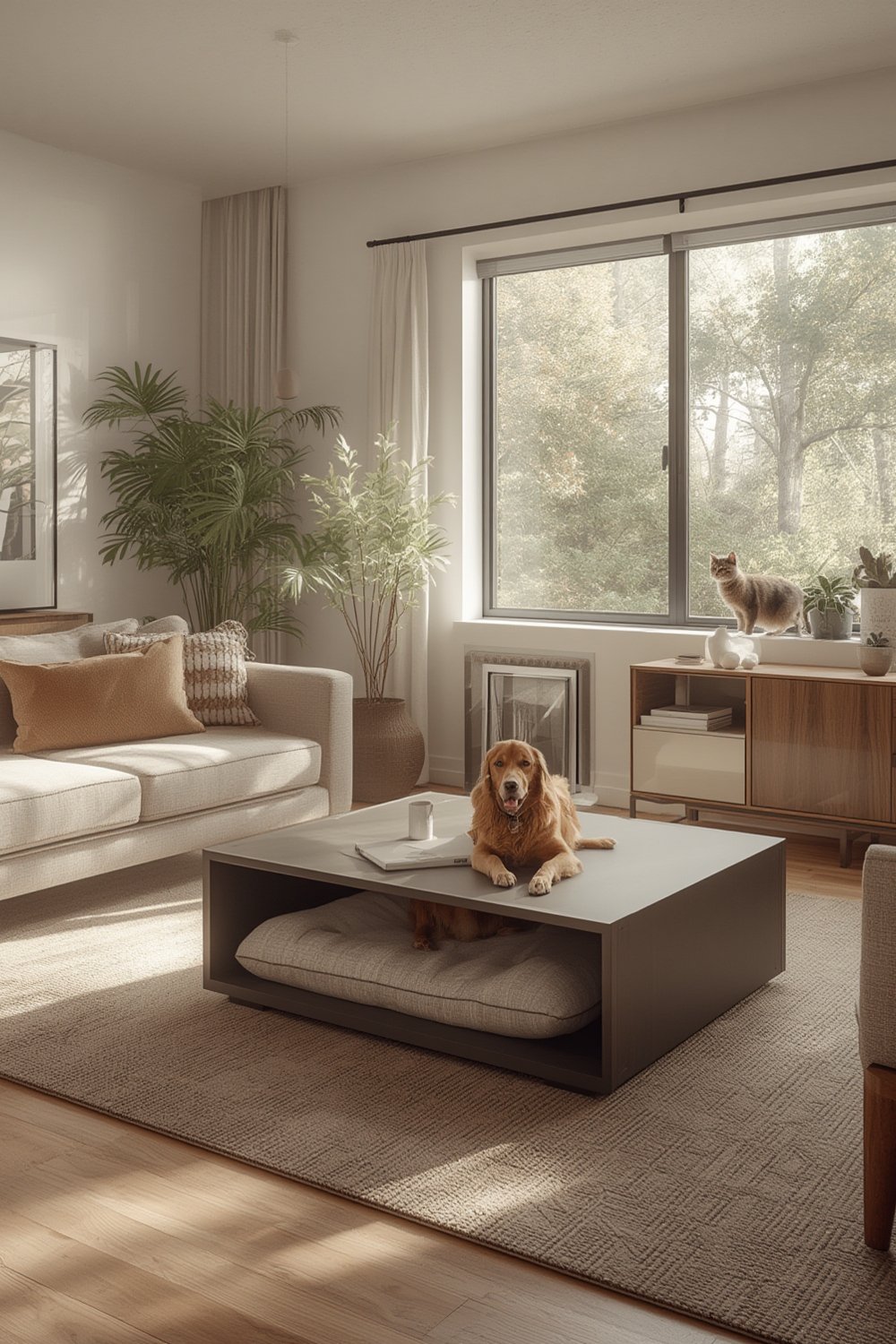
- Pet-proof flooring (LVP, textured tile, or scratch-resistant laminate): Durable, easy to clean, and more comfortable for both pets and seniors. Suitable for high-traffic, high-mess zones.
- Dog washing station: Reduces mess and injury risk from slippery tubs (for both pets and the people bathing them). Key for mudrooms and laundry rooms.
- Pet door installation: Improves autonomy for pets and keeps owners from unnecessary trips—can be fitted for wall, door, or sliding glass.
- Built-in feeding station: Minimizes spills, trip hazards, and clutter; can be accessible for pets and anyone who finds bending difficult.
- Scratch-resistant finishes: On cabinets, doors, and floors to reduce visible wear and ongoing maintenance cost.
Decision drivers: Durability, hygiene, slip resistance, and universal appeal add up to better resale value. Nearly half of homeowners estimate costs over $20,000 to prepare homes for aging in place—so choices must be practical, durable, and cost-justified.
Pet-Proof Flooring — Top Complaints, Trade-offs by Material, and Who Should Choose What
Choosing pet-proof flooring is not just about durability; it’s about avoiding the most common user-reported issues:
- Slipperiness: Good for cleanup, bad for aging adults or energetic pets—avoid overly smooth or glossy surfaces.
- Surface Wear: Scratches, gouges, and denting over time, especially from pet claws and heavy furniture.
- Seams trapping hair/debris: Poorly-seamed materials (like some laminate or tile) can trap dirt and fur.
- Cold or “clinical” feel: Some complain of floors feeling hard and chilly, especially on concrete, tile, or older vinyl.
- Discoloration/Staining: Light-colored or low-quality materials can stain or fade—especially near pet food and litter areas.
Compare materials below (many homeowners note a lack of published post-installation reviews; request both user reviews and contractor references):
| Material | Pros | Cons | Best For |
|---|---|---|---|
| LVP (Luxury Vinyl Plank) | High scratch/water resistance, non-slip textures available, easy to clean | Can feel cold, off-gas VOCs if poor quality, plank seams collect fur if not tightly fitted | Active pets, high-traffic, senior safety |
| Textured Porcelain Tile | Super durable, easy sanitation, resists odor | Hard underfoot, grout needs sealing, cold feel | Entryways, mudrooms, dog washing zones |
| Engineered Hardwood (w/scratch coatings) | Warmer look/feel, real wood veneer | Vulnerable to deep damage, must choose high-grade coatings, costlier | Living, dining where scratch volume is lower |
| High-End Laminate (AC4/5) | Affordable, scratch/stain resistant, wide styles | Seams can swell with moisture, longevity only if installed correctly | Bedrooms, budget upgrades, resale refreshes |
| Sealed Concrete | Ultra-tough, seamless, industrial vibe | Very hard/cold, can crack, best with radiant heat add-on | Basements, garage conversions, utility |
Note: “No specific complaints or negative experiences were identified in search results for similar home modifications”—be sure to seek user reviews and honest contractor input, since public documentation is thin.
For more on LVP and SPC floor choices, see our 2025 LVP Flooring Trends and SPC Flooring Buyer’s Checklist.
Average Costs Mid‑2024 — Materials, Installation, and Maintenance Estimates
Renovation costs matter, especially when nearly half of homeowners estimate $20,000 or more to prep for aging in place (source).
- LVP (Luxury Vinyl Plank): $5 – $12/sq ft installed, $0.50 – $1/sq ft yearly maintenance
- Textured Porcelain Tile: $9 – $18/sq ft installed, $200 – $400 for professional sealing (every 4-6 years)
- Engineered Hardwood (scratch coating): $12 – $22/sq ft installed, refinishing $900 – $2,500 (every 8-12 years if needed)
- High-End Laminate (AC4/5): $6 – $11/sq ft installed, minimal, but must replace if water damaged
- Dog Washing Station: DIY kit $900 – $1,800, Pro install $1,900 – $5,500 (includes waterproofing, plumbing, tile)
- Pet Door Installation:
- In Door: $180 – $400 (material + install)
- In Wall: $350 – $700 (additional cost for wall cut, insulation, flashing)
- Sliding Glass: $450 – $900 (panel insert)
- Built-in Pet Feeding Station: Custom cabinetry $400 – $1,200, semi-custom inserts $120 – $350
Budget Tip: Factor in hidden costs (subfloor patching, trim adjustment, debris disposal, or extra waterproofing in aged homes). Consider multiple financing routes—home equity, specialty loans, or phased upgrades.
Best Scratch-Resistant Materials — Evidence, Tests, and Certifications to Look For
Not all “scratch-resistant” claims are equal. Here’s what to ask for and examine:
- LVP/SPC with Multi-Layer Wear Layer: Seek at least 20 mils thickness and ceramic bead texturing; e.g., Shaw Floorte Pro or Coretec Plus lines (compare SPC brands).
- Aluminum-oxide finished engineered hardwood: Request manufacturer’s abrasion and Janka (hardness) test data.
- High-Pressure Laminate (HPL) with AC5 rating: AC/PEI (Abrasion Class / Porcelain Enamel Institute) indicates top wear resistance; AC5 is commercial grade.
- Textured Porcelain Tile PEI 4–5: PEI 5 is highest and commercial-grade; look for microtexturing for slip resistance.
- Warranty Coverage: Demand warranty language specifically covering pet scratches and stains, not just “domestic use.”
Request these test metrics:
- Abrasion/Wear-layer in mils (minimum 18-20 for active pets)
- Janka rating (wood): target 1,800+ for strong engineered boards
- AC rating (laminate): minimum AC4, ideally AC5
- PEI rating (tile): minimum 4 for moderate traffic; 5 for max durability
- Manufacturer’s ASTM D4060 abrasion, scratch test reports
Research gap: No minimum technical specs are published in most consumer articles—always request certification documents and test data from the vendor or installer. For aging-in-place flooring, see our full modification guide.
For sustainable, low-VOC, or recycled options, explore the new biophilic home design trends.
Dog Washing Stations & Built-In Feeding — Design, Costs, and Hygiene Best Practices
Dog washing station: Choose between a freestanding model (easier install, less costly) or custom built-in (higher resale, seamless look). Both should include:
- Non-slip pan or base (acrylic, textured tile, or stainless steel)
- Handheld sprayer (anti-scald feature if elderly users present)
- Waterproof wall/floor panels
- Drainage sloped for complete dry-out
- Easy access (step-up or roll-in for pets and aging users)
- Antimicrobial finishes or grout to curb odors and biofilm
Built-in pet feeding stations: Opt for drawer-mounted or cabinet-embedded trays at a height appropriate for the tallest pet or for less bending by adult users. Look for removable stainless or ceramic bowls and smooth, wipe-down surfaces. Set a schedule for monthly sanitation and frequent bowl washing.
Expect to invest up to 15–25% of a full mudroom/laundry remodel budget in these features, especially if custom cabinetry or new plumbing is required. These upgrades fit best as part of larger renovations; plan scope to maximize impact per dollar.
Safety, Regulatory and Accessibility Considerations for Pet Doors and Washing Stations
Before starting, check all legal and safety requirements:
- Pet door location: Ensure installation won’t compromise a load-bearing wall. Use factory-provided sleeves and heavy-duty flashing for all wall installations.
- Energy efficiency: Choose insulated doors with strong weatherstripping to prevent heat loss and drafts.
- Security: Smart pet doors with microchip or Bluetooth sensors (e.g., SureFlap, PlexiDor) allow only registered pets, boosting security and energy efficiency.
- Accessibility: Add low-profile threshold ramps and non-slip mats around access points, and make all wash station areas wheelchair- and walker-friendly.
- Permits/Regulations: Some HOAs or municipalities restrict external doors, wall penetrations, or visible modifications—confirm in advance.
- Professional help: Hire a licensed contractor for major cut-throughs and a plumber/electrician if changing water supply or adding GFCIs; DIY can violate code and endanger warranty coverage.
Only 10% of U.S. homes are “aging ready”—barrier-free, with step-free entryways—and simple upgrades like no-threshold entries plus pet-focused features can reduce fall risk by 38% (see survey data). Prioritize these features in every install for multi-generational homes.
What Top-Ranking Articles Miss — Innovations, Tech Integrations, and Sustainability Opportunities
Most published articles miss opportunities for smart integrations and advanced material choices. Here’s how to go further:
- Smart pet doors with microchip or Bluetooth sensors (e.g., SureFlap, PlexiDor) allow only registered pets, boosting security and energy efficiency.
- Automated dog washing zones (motion-triggered rinse, silica bead drying, or antimicrobial UV lights for deep sanitizing) save time and water.
- Built-in pet cameras and feeder telemetry for remote pet monitoring or dispensing—aligns with smart home trends (see smart home integration guide).
- Sustainable surfaces: LVP or tile lines with recycled or reclaimed content, low-VOC adhesives and coatings, or repurposed wood with ceramic-oxide finishes.
- Lifecycle cost checks: Demand product warranty, repairability, and cleaning cost details from suppliers; most guides skip this.
Editorial gap: Most articles skip certification/test data and forget to list manufacturer documentation. Always request proof of technical and sustainability claims.
Resale Value and Buyer Appeal — What the Data Says (and Doesn’t)
While no concrete 2024 data exists on return on investment for specific pet-friendly or aging-ready modifications, Realtors are clear: such upgrades widen your buyer pool and improve sellability for both pet lovers and families seeking aging-in-place features (source).
Present these improvements as “durable, easy-care, and safety-first upgrades.” List specifics in every MLS description: “Commercial-grade, pet-proof flooring throughout,” “Integrated dog spa and barrier-free entry,” or “Accessible, scratch-resistant surfaces—ready for pets and people.”
Tip: Most insurers and appraisers are not yet quantifying value for these features—but lower maintenance and future-remodel savings are marketable in listing copy. For more on universal design for resale, see our accessible curb appeal guide.
Actionable Contractor Brief & Buyer Checklist (Downloadable)
Only 46% of homeowners feel prepared to update their homes. Make your project smoother and more successful by providing contractors with a clear, ready-to-use checklist:
- Materials: LVP/SPC (min 20 mil wear layer), PEI 4–5 tile, AC4–5 laminate, antimicrobial grout
- Specs to request: Product certificates, scratch/abrasion test reports (ASTM, Janka, AC/PEI), VOC content statements
- Warranty: Pet scratch and stain coverage in writing
- Accessibility add-ons: No-threshold entries, anti-slip surface treatments, lever-style hardware (see our bathroom accessibility upgrade guide)
- Timeline: Pre-construction (1 week), materials lead time (2–4 weeks), installation (2–5 days per area), drying/curing (per manufacturer)
- Extras: Subfloor readiness, waterproof sealing, trim/color matching for new flooring areas
- Vetting script for contractors: “What certifications does your team hold (flooring, plumbing, electrical)? Can you provide references for both pet-friendly and aging-in-place projects? What technical data or testing comes with your recommended products?”
Having a written brief and checklist in hand speeds decisions, prevents miscommunication, and helps ensure nothing critical is missed.
FAQ
How do I choose the best pet-proof flooring for both pets and seniors?
Match your flooring to your pet’s habits (shedding, claw strength) and mobility needs in your household. LVP offers balance for most homes: durable, non-slip, and simple to maintain. Go for commercial-grade products and request technical specs. For high-risk fall zones, prioritize textured or slip-resistant surfaces.
Are dog washing stations worth the investment?
They increase daily convenience, reduce home mess, and make bathing safer for both pets and family members, especially those with limited mobility. Value is highest if bundled with a larger remodel or mudroom upgrade.
What are the downsides of pet door installation?
Possible security risk, energy loss, or water leaks if improperly installed. Choose insulated, self-locking models and hire a pro for wall or glass doors. Always check local permit and HOA regulations before beginning.
How do I ensure upgrades count for aging in place and future resale?
Select universal design features (no steps, wide entries, easy-clean materials). Document upgrades with before/after photos and product warranty info. Highlight features in sales listings as safety, durability, and easy-care improvements for broader appeal.
Can I finance these pet-friendly home modifications?
Yes. Options include home equity loans, lines of credit, or specialty remodel loans. Some communities offer grants for accessibility features; check local programs for eligibility.