
Spa bathroom features are the sweet spot for homeowners aged 45 to 70 seeking to transform daily routines into luxury experiences—while making smart, accessible choices that increase comfort, safety, and home value as they age.
Key Takeaways
- Strategic spa bathroom features can deliver luxury, enhance daily comfort, and support aging in place—all raising appeal for future buyers.
- Missing market data on exact ROI, buyer demand, and true installation costs makes local contractor quotes and review analysis essential for smart investment.
- Homeowners must anticipate hidden costs, maintenance pain points, and prioritize both style and safe accessibility in every upgrade.
- Why spa bathroom features are a strategic investment for homeowners planning to age in place
- Top spa bathroom features to prioritize (functional luxury that buyers and homeowners value)
- Realistic cost expectations, hidden fees, and timelines for high-end spa installs (what we know and what’s missing)
- Top pain points during installation and maintenance for spa bathroom features
- Durability & functionality complaints from users — what the research shows (and where data is absent)
- How to design a spa bathroom that balances luxury, accessibility, and resale value (actionable checklist)
- Market data gaps and why they matter—research limitations uncovered
- Research-to-action plan for homeowners (how to get reliable ROI, cost, and durability answers)
- Three overlooked content angles competitors rarely cover (opportunity areas for this post)
- Bottom line and call-to-action for homeowners (next steps and resources)
- FAQ
Why spa bathroom features are a strategic investment for homeowners planning to age in place
Spa bathroom features today do double duty: they bring luxury to daily routines while making homes more accessible and marketable for buyers seeking aging-in-place capabilities. Thoughtfully chosen upgrades, like grab bars, heated bathroom floors, and curbless showers, not only elevate comfort but help future-proof a home. For older adults or caregivers, feeling safe and independent matters—a majority of Americans over 50 (84%) now say aging in place is a priority, with 58% rating it as extremely important (source). However, nearly 9 in 10 homes lack true aging-readiness (source). As luxury bathroom upgrades increasingly overlap with accessibility requirements, these features are now an investment in daily wellbeing and property value—not just a splurge.
Top spa bathroom features to prioritize (functional luxury that buyers and homeowners value)
Homeowners and buyers value spa upgrades that balance comfort, beauty, and easy accessibility. The highest ROI and user satisfaction tends to come from:
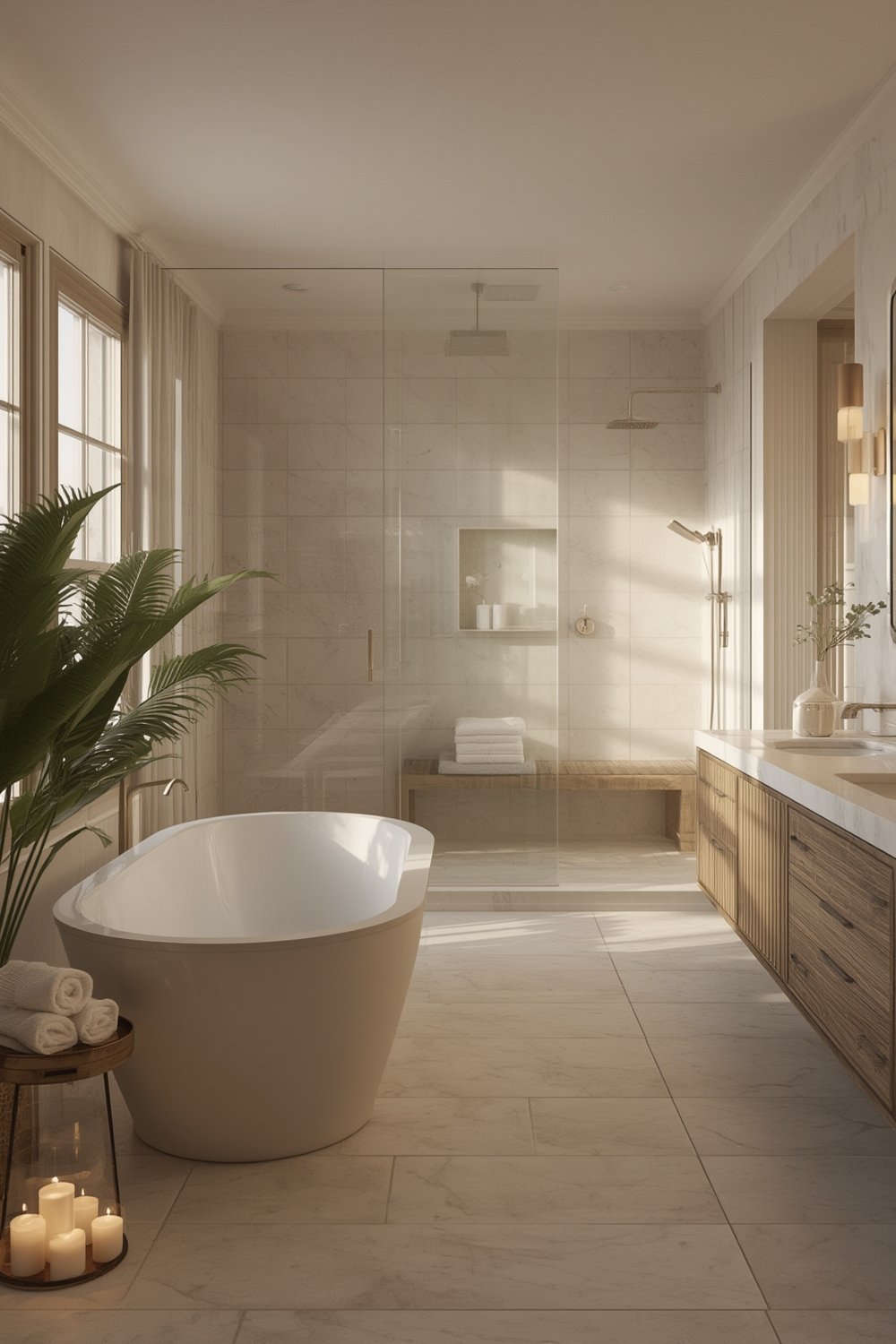
- Heated bathroom floors – consistent warmth, slip prevention, and comfort especially for aging joints. Popular for their luxury feel and practical benefit.
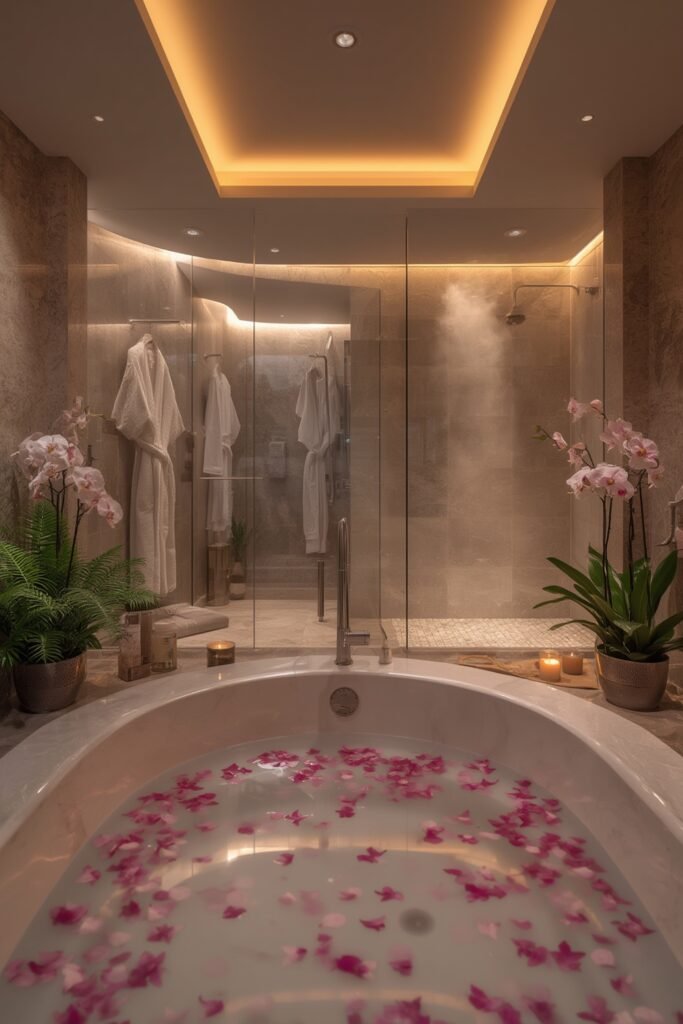
- Low-threshold steam shower (ideally with built-in seating) – pairs luxurious steam therapy with easier access for users with mobility concerns. Dual controls and bench options make it safer and more marketable.
- Soaking tub installation with transfer-friendly design – deeper, ergonomic tubs that allow side entry, low step, and secure grab bars. Upgrades like these reduce fall risk while delivering spa-level comfort.
- Rainfall shower head with hand-held accessory – offers both full-coverage and focused spray. Combining fixed and flexible hand showers adds accessibility and makes cleaning easier.
There is, however, a stark gap in available research: No public data currently identifies which luxury bathroom upgrades most influence buyer demand or sale prices in the past two years. The above recommendations are shaped by strong market heuristics and the needs outlined in recent aging-in-place studies (see accessibility feature guide).
For curbless shower installation, barrier-free access, and universal design, also check the walk-in shower conversion resource.
Realistic cost expectations, hidden fees, and timelines for high-end spa installs (what we know and what’s missing)
Luxury spa bathroom upgrades require careful budgeting and time allocation. Here’s what to expect:
- Project Timeline: From demo to final clean-up, typical spa bath installs (with multiple features) run 3–8 weeks. Planning, ordering, permitting, and finish work often stretch this further—especially for heated bathroom floors, steam shower installs, or complex soaking tub installation.
- Potential Hidden Fees: These routinely surprise homeowners:
- Structural repairs/remediation (esp. if water damage is exposed during demo)
- Electrical panel upgrades for heated floors or steam shower
- Advanced waterproofing and drainage for walk-in or curbless showers
- Permit costs and code-mandated ADA adjustments
- Specialty fixture delivery surcharges
- Hard Truth: No authoritative source provides a 2024 average cost for grab bars, walk-in tubs, or even base soaking tub installs. Published ranges are highly regional, with dramatic fluctuations depending on site conditions.
What to do: To avoid budget overruns, always request line-item estimates from multiple local contractors. Ask for contingencies covering unknowns (water damage, subfloor rot, hidden leaks). Don’t forget finish costs (tile, paint, vanity lights) can spiral in luxury projects.
Because “No search results provide 2024 average costs for walk-in tubs, grab bars, or related features,” gathering multiple local quotes is the only safe way to set expectations. Learn more about budgeting for accessibility with our tips for aging in place modifications.
Top pain points during installation and maintenance for spa bathroom features
The real challenges with spa bathroom features come during the install—and over years of use. Homeowners and contractors alike report these common pain points:
- Discovery of water damage or subfloor issues after demo – adds unexpected cost and time
- Electrical or heating system updates required for heated bathroom floors and steam shower units
- Permitting confusion and ADA compliance hurdles, slowing approval for aging-in-place features
- Waterproofing failures in walk-in showers and around tub bases leading to leaks or mold problems
- Confusion on maintenance and warranty repairs—especially for advanced electronics (control panels, pumps, thermostatic valves)
- High ongoing upkeep costs (53% of older adults report financial pain as a main aging-in-place challenge – source)
| Feature | Common Pain Point | Maintenance/Repair Impact |
|---|---|---|
| Heated bathroom floors | Electrical upgrade, uneven heat, difficult access if repair fails | Floor must be opened to fix; costly |
| Steam shower | Moisture control, complex wiring, warranty confusion | Frequent servicing needed; mold risk if left unchecked |
| Soaking tub installation | Difficult to fit in older bathrooms, possible reinforcement needed | Leaks/sealing issues; difficult for repairs |
Few online sources provide specifics on user complaints for these installs, so review aggregating and contractor references remain essential.
Durability & functionality complaints from users — what the research shows (and where data is absent)
Actual owner feedback, though somewhat anecdotal, points to recurring issues:
- Rainfall shower head complaints about poor water pressure—especially in low-pressure homes
- Electronic steam shower controls or heated floor thermostats failing after a few years
- Heated bathroom floors heating unevenly, or not at all, due to installation flaws
- Soaking tub sealing problems leading to subfloor leakage
No public research compiles complaint data by brand or fixture for 2024; relying on verified review platforms, contractor references, and forum communities is the best way to surface product-specific problems.
For hands-on advice to avoid ADA pitfalls and design slip-ups, see our accessibility retrofit guide.
How to design a spa bathroom that balances luxury, accessibility, and resale value (actionable checklist)
Follow this checklist to combine the best of spa experience, safety, and future-proof value:
- Curbless (roll-in) showers for easy entry and modern look (see conversion steps)
- Integrated shower seating and accessible shelving
- Low-step or transfer-friendly soaking tub installation, with grab bars strategically placed
- Thermostatic controls (anti-scald, large print, easy to reach)
- Non-slip flooring and large-format tile (less grout to clean)
- Dual or redundant hand-held and fixed rainfall shower head setups
- Zoned heated bathroom floors for safe step-out areas
- Accessible cabinets and pull-out storage (aging-friendly storage tips)
- Easy-to-service fixtures for sinks, drains, and electronics
With 75% of adults aged 50+ preferring to stay in their homes (source), and 88% of those ages 50-80 calling it important (source), demand for accessible luxury bathroom features will keep rising.
Include biophilic design touches for stress reduction with guidance from our biophilic home guide.
Market data gaps and why they matter—research limitations uncovered
Every major claim about spa bathroom features and ROI today comes with significant data caveats:
- No up-to-date ROI statistics on spa bath upgrades or precise 2024/2025 resale premiums
- No clear cost benchmarks or market growth projections for home safety modifications
- No authoritative compilations of consumer complaints—buyer beware on brand promises
- Unclear correlation between luxury bathroom upgrades and actual buyer demand
- No projected statistics for the number of U.S. seniors choosing aging-in-place modifications
What does this mean for you? Local validation is key: you must supplement research with area-specific quotes and real estate agent feedback, just like with other high-return upgrades such as SPC flooring and LVP flooring.
Research-to-action plan for homeowners (how to get reliable ROI, cost, and durability answers)
Given the gaps highlighted above, use this step-by-step playbook to make confident, data-driven decisions for your luxury bathroom upgrades and steam showers:
- Ask at least three local contractors for detailed, apples-to-apples bids—demand line items for electrical, waterproofing, and permitting contingencies.
- Get all manufacturer documentation on warranty and local service technicians for every major fixture (steam shower, soaking tub installation, heated floor system).
- Compile user reviews and complaints for each chosen product or supplier—dig into third-party ratings, professional forums, and hands-on videos.
- Consider a pre- and post-upgrade valuation from a local appraiser, or consult with a real estate agent who knows buyer priorities in your market.
- Document the before/after transformation, and if possible, gather neighbor or potential buyer feedback to test resale appeal.
If you’re also considering full-home systems, see our resource on smart home upgrades.
Three overlooked content angles competitors rarely cover (opportunity areas for this post)
- Designing spa bathrooms specifically for aging in place without sacrificing luxury design—detailed examples of converting traditional fixtures to upscale, accessible alternatives.
- How to build a realistic procurement and budgeting plan with step-by-step guidance on identifying and containing hidden project fees for spas—and how to protect timelines.
- Measuring resale ROI locally, using a method any homeowner can copy: get a local agent consult, document the project before/after, and even poll buyers on feature desirability.
These angles fill the gap competitors ignore—no current guides show how to combine spa and safety needs, fully budget, or accurately estimate local ROI. To dig even deeper on what others overlook, check our aging-in-place research.
Bottom line and call-to-action for homeowners (next steps and resources)
Balancing spa bathroom features that are both luxurious and accessible is a smart way to enhance everyday comfort, support safety as you age, and attract future buyers. Plan for hidden costs, validate ROI with local contractors and agents, and don’t skip gathering brand reviews for heated bathroom floors and fixtures before you commit. With 84% of older Americans prioritizing aging in place, and most homes still unprepared, now is the time to act. Request local estimates or download our upgrade checklist now to take the next step towards your high-comfort, future-ready bathroom.
FAQ
What is the best first spa bathroom feature to upgrade for both comfort and accessibility?
Start with heated bathroom floors—they offer daily comfort, help prevent slips, and are a major bonus for both accessibility and resale appeal. Pair with a curbless shower for maximum upgrade value.
Are spa bathroom upgrades covered by insurance or home improvement grants?
Most luxury bathroom upgrades are self-funded. While some accessibility features can qualify for state/local assistance, there’s no universal coverage—always check your local area for programs. Resources like this accessibility grants guide can help.
How do I avoid common installation setbacks for steam showers and heated floors?
Have the site evaluated for electrical/waterproofing needs before ordering any fixtures. Insist on all work permits, and ask for proof of experience from the contractor for similar installs to avoid rookie mistakes.
Is ROI guaranteed if I install spa features before selling my home?
ROI depends heavily on your local market, buyer profile, and the quality of upgrades. No 2024 data can guarantee exact returns, so consult local agents and get a pre/post renovation house value estimate.
How do I pick durable, low-trouble brands for rainfall shower heads or steam shower controls?
Search for independent third-party reviews and ask contractors for unbiased feedback from recent installs. Use local showrooms to test controls and ask tough questions about typical failure rates.