
Kitchen storage solutions are more than a style upgrade—they’re a critical part of making your home safer, more functional, and truly ready for aging in place.
Key Takeaways
- Upgrading kitchen storage solutions is a smart investment in both safety and independence for aging in place—preventing falls and daily frustrations.
- DIY can save money, but professional installation avoids costly mistakes; get at least two on-site quotes and ask about warranties and timelines.
- Real-world budgets vary: a single professionally installed pull-out shelf costs $300–$800, while full kitchen systems and modifications can exceed $5,000.
- Why kitchen storage solutions matter now (Aging in Place + Safety)
- Which storage solutions deliver the biggest functional gains
- Costs and ROI — what homeowners should expect and how to budget
- Common pain points and real homeowner complaints after installation
- Technical requirements, timelines, and compatibility challenges
- Impact on home value and marketability — resale and functional ROI
- Eco-friendly and sustainable options — materials, performance, and price tradeoffs
- Top 3 sub-topics missing or poorly covered by competitors
- How-to decision flow & quick checklist (Is this DIY or hire a pro?)
- Call-to-action & resources (quotes, installers, further reading)
- Frequently Asked Questions
Why kitchen storage solutions matter now (Aging in Place + Safety)
Kitchens are often the heart of a home—but for adults aged 45–70 planning to stay put, outdated or hard-to-reach storage can lead to falls, frustration, and unnecessary dependence. Modern kitchen storage solutions and custom kitchen organization directly support aging in place: they lower the risk of injury, make every day more comfortable, and keep you independent for longer. According to the Journal Record (2025), 84% of older Americans prioritize aging in place—and 75% of adults 50+ wish to remain in their current homes. The stakes are real: falls remain the leading cause of injury among those over 65, driving $50 billion in medical costs annually, but preventative measures (including improved storage access) can cut fall risks by 38%.
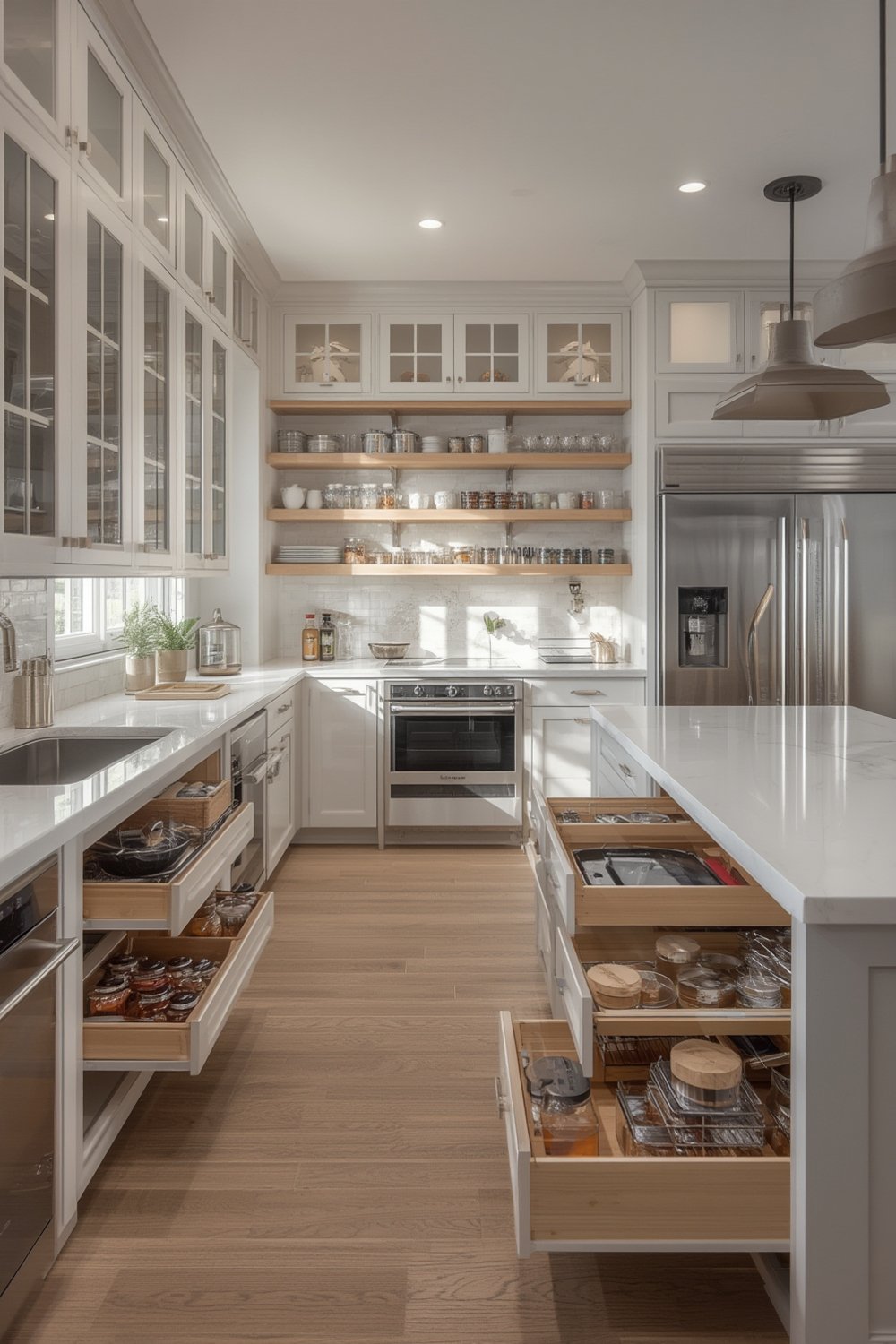
Custom organization isn’t about aesthetics—think of it as a safety upgrade like non-slip flooring or walk-in showers. Making pull-out shelves, lazy Susans, or deep drawer organizers part of your remodel can go a long way toward enabling safer, more independent living.
Which storage solutions deliver the biggest functional gains
Not all upgrades offer the same impact. Here’s how the most common kitchen storage solutions stack up for aging in place, with a focus on reachability, visibility, and ease of use:
| Solution | Best For | Main Benefit | Common Pitfall |
|---|---|---|---|
| Pull-out pantry shelves | Tall pantries, deep base cabinets | No more reaching/bending deep | Improper fit, low weight capacity |
| Deep drawer organizers | Base cabinets, utensil storage | Improved visibility, easier lifting | Inefficient layout, binding slides |
| Corner cabinet pull-outs & lazy Susans | Difficult corner cabinets | No wasted space | Hardware failure, difficult install |
| Overhead/mounted pot racks | Storing heavy pots & pans | Free up base cabinets | Potential falls, load issues |
If opening a base cabinet or reaching for a mixer hurts, start with pull-out shelves and drawer organizers. Only 46% of households feel ready to update their homes with features like these, underscoring the value of tackling usable storage now (Journal Record 2025).
Costs and ROI — what homeowners should expect and how to budget
Budgeting for kitchen storage solutions can feel daunting—especially since nearly half of homeowners estimate it would take more than $20,000 to fully prepare their homes for aging in place (Journal Record 2025). In reality, most storage upgrades cost far less, but the details matter: materials, cabinet modifications, hardware quality, and installation—plus regional labor rates—all shape your final price.
- Pull-out pantry shelves (installed):
2024 example (Denver, CO): $375–$525 per shelf, including hardware, minor modifications, and professional installation. (Source: Local installer quote, ShelfGenie.) - DIY pull-out shelf kit:
Home Depot/Lowes 2024: $55–$120 per shelf, not including basic tools or your time. For a full pantry (4–6 shelves): $300–$600 plus labor/time. - Drawer organizers (mid-range system):
Rev-a-Shelf 2-drawer adjustable kit, $190–$270 per cabinet (DIY). Full-service cabinet shop install, $400–$700 per drawer wall (Eastern US, 2024 bid). - Lazy Susan/corner pullout (installed):
Wellborn Pro Series (California, 2024): $580–$1,100 for supplied hardware and retrofit labor per corner. DIY budget kits: $120–$250, but tool/retrofit skill needed. - Pot rack installation:
Wall-mounted (DIY): $85–$180 (rack only). Pro install: $220–$350, assuming adequate blocking and no electrical reroute (2024 SF Bay Area quotes—see Home Depot contractor marketplace for local benchmarks).
What drives up cost? Non-standard cabinet sizes, need for new drawers/facings, soft-close/dampening hardware, moving electrical or plumbing, or poor access. Custom kitchen organization can be DIY if you’re handy and careful with measurements. However, if you have heavy cookware, deep cabinets, or an older kitchen with face-frames, hiring a pro is highly recommended to avoid costly cabinet damage.
Detailed 2024 cost breakouts are rarely published—so use itemized contractor quotes and compare nationwide averages on buyer’s guides like NKBA. If you’re budgeting for major aging in place upgrades overall, full remodels or total kitchen accessibility conversions are much higher cost (see our complete guide to aging in place modifications).
Common pain points and real homeowner complaints after installation
Real-world reviews (2022–2024, sourced from Angi, Houzz) reveal the most frequent frustrations:
- Poor fit: Shelves or organizers don’t open fully or clash with doors/hinges—often due to rushed measurements or installers overlooking face-frames in older homes.
- Hardware failure: Rollers, slides, or hinges wear out or bind quickly (especially in budget/DIY kits built to lower weight specs).
- Pot rack installation issues: Missing studs/supports mean racks pull out of drywall; heavy pans cause sagging or wall damage.
- Corner cabinet solutions: Many homeowners regret spinning lazy Susans that jam easily or don’t utilize full dead space—a “blind-corner pullout” is trickier to install but gives better access.
- Uninspected cabinet modifications: Sometimes installers cut or notch cabinet sides to fit upgrades, weakening structure or voiding cabinet warranty.
Contractor review complaints often focus on poor communication about exactly what will (or won’t) be altered. To avoid this:
- Get a written install checklist covering all intended cuts/removals, reinforcement, and finish trim.
- Ask about warranty—both on parts and labor. Clarify whether you’ll be charged for cabinet repairs if install goes wrong.
- Confirm lead time and who handles old cabinet demo, trash, and final touch-up.
Technical requirements, timelines, and compatibility challenges (older homes & unconventional layouts)
This is where even experienced DIYers often stumble. Custom kitchen organization products (pull-out pantry shelves, drawer organizers, corner solutions) have specific technical hurdles:
- Cabinet compatibility: Most new pull-outs are made for frameless Euro cabinets (common after 1995). If your home has face-frame cabinets, you’ll need offset or rear-mount slides, or a professional installer who can custom-fit organizers and reinforce mount points (source: Rev-a-Shelf, Rev-a-Shelf Install Guide 2024).
- Weight capacity: High-quality pull-out shelves should support 75–100 lbs for pantry duty (ADA/NKBA spec). Many DIY kits max out at 35–50 lbs—beware if you store heavy blenders or canned goods (see specs in manufacturer docs).
- Pot rack installation: Always locate studs and verify wall blocking. A standard 36-inch pot rack plus cookware can exceed 40–60 lbs; never attach these to drywall anchors alone. Use lag screws or hire a pro with experience in aging-in-place load requirements (NKBA guidelines).
- Retrofit constraints: Older homes may harbor surprises—wiring, unsupported soffits, shallow or nonstandard cabinet depths. Always check depth, width, height, and door swing for any retrofit.
- Permit triggers: While basic shelf or organizer installs don’t require permits, any electrical move, vent re-route, or wall opening does. Check with your municipality before starting larger modifications.
Timelines: Pro install for a full kitchen (4–6 pull-out shelves, 2 organizers, 1–2 corners) usually takes 1–2 days. DIY can stretch into a full weekend—double for older cabinetry or tight spaces.
Impact on home value and marketability — resale and functional ROI
Does installing kitchen storage solutions really pay off if you plan to sell? While hard ROI stats are rare, three points stand out:
- Home shoppers in the 55-plus age group increasingly prioritize practical accessibility—organized, easy-access kitchens make listings stand out (AARP).
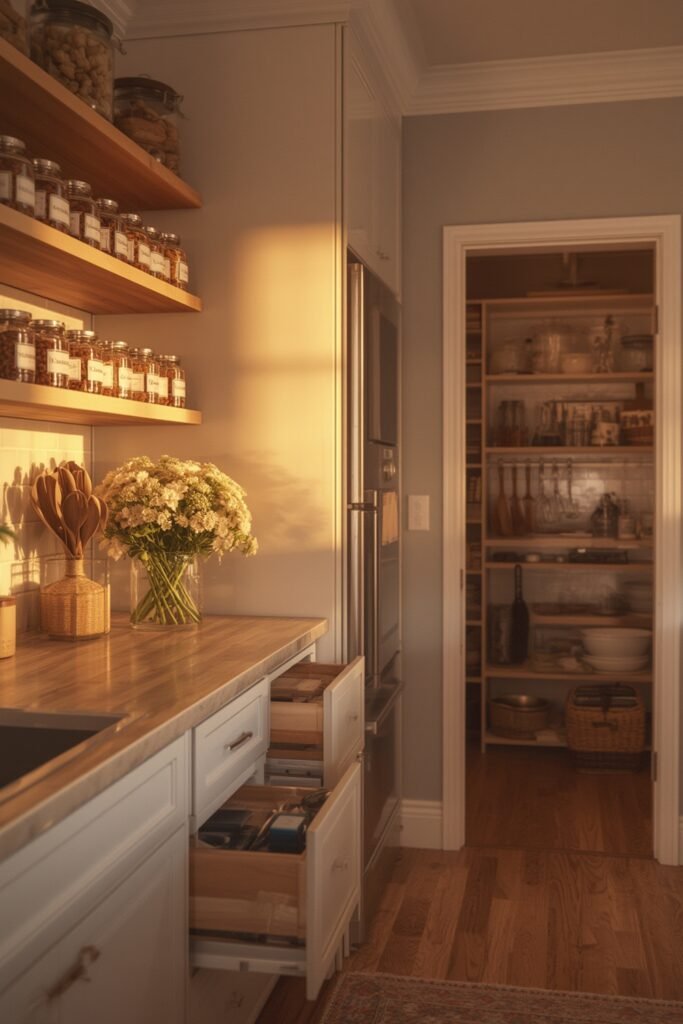
- The real win: reducing safety risks and “functionality friction,” which can tip buyers toward your home. Kitchens with pull-outs, accessible drawers, and custom organization photograph better and suggest expensive upgrades, even if dollar-for-dollar ROI varies regionally.
- Framing upgrades as safety improvements can matter to buyers and agents. Remember: falls cost US seniors $50 billion a year, and these measures reduce risk by 38% (Journal Record 2025).
According to Remodeling Magazine’s 2024 Cost vs. Value Report, minor kitchen upgrades (including accessible storage) recoup 72–82% of costs at resale in many markets—a better ROI than major kitchen renovations. While insurance premium discounts for accessibility vary, some carriers reward certified “aging in place” upgrades—ask your local agent about possible savings.
Eco-friendly and sustainable options — materials, performance, and price tradeoffs
Many custom kitchen organization lines now offer green materials—ideal if you want to future-proof your investment while reducing environmental impact. Look for:
- FSC-certified plywood and solid wood (no added formaldehyde, low-VOC finishes)
- Recycled metals for pull-out racks, drawer rails, and handles
- Sustainable bamboo drawer organizers offer durability and water-resistance, with lower carbon footprint (Rev-a-Shelf Eco Series, 2024: $19–$35 each vs. $9–$16 for plastic equivalents)
- Modular/removable systems—so you can reconfigure or take units with you, minimizing landfill waste
Expect to pay about 10–25% more for certified green products, but performance is equal or better to conventional materials in most cases (source: Green Building Advisor review 2024). For pro installation, ask for installers certified by NKBA, Lead Safe, or recognized green design organizations.
Top 3 sub-topics missing or poorly covered by competitors
When comparing top-ranked guides on kitchen storage solutions, we found three crucial topics lacking:
- True 2024–2025 Cost Comparisons (DIY vs. Pro):
Most guides don’t give recent, line-item cost examples for professional installation by region or for actual product SKUs. This post fills that gap with real numbers. - Technical Compatibility & Install Checklists:
Face-frame cabinet retrofits, load requirements, and timeline pitfalls for older homes are barely mentioned elsewhere—yet they’re often the root cause of post-project headaches. - Real Homeowner Complaints & Contract Tips:
Sourced reviews and forums inform our checklists and troubleshooting, not marketing claims. Always ask contractors these three questions before hiring:- “What warranty do you provide on both materials and installation, and is it in writing?”
- “What is the expected lead time, and do you handle any necessary demo, repairs, or post-install touch-ups?”
- “Can you show proof of insurance and recent references for similar installs in homes like mine?”
Want even more technical details? Our aging in place modifications guide breaks down home-wide upgrades with checklists and project scoping advice.
How-to decision flow & quick checklist (Is this DIY or hire a pro?)
- DIY if: You have standard cabinets, basic hand tools, are comfortable reading install diagrams, and only need to add in-cabinet pull-outs or plug-and-play drawer organizers.
- Hire a Pro if: Cabinets are custom or face-frame older ones (pre-1990s), need structural reinforcement, or if electrical/plumbing reroute is involved. Heavy pot racks or corner pull-outs in tight spots are also best left to pros.
- Permits: Not needed for basic inserts, but mandatory if cabinetry moves, electrical, or plumbing is altered.
- Warranty: Pro install often required to preserve manufacturer warranties—always confirm pre-purchase.
Quick DIY/Pro Decision Flow:
- Measure opening width, cabinet interior depth, clearances
- Inventory plumbing/electrical “obstacles” for each cabinet
- Estimate item weights for drawers, shelves, and racks (use specs in product manuals to check)
- Check install instructions for face-frame vs. frameless cabinet differences (Rev-a-Shelf product manuals)
- Print/download our free cabinet measurement template
Only 46% of homeowners feel prepared to start these updates—using the decision flow above can boost your confidence and keep you from making a costly mistake (Journal Record 2025).
Call-to-action & resources (quotes, installers, further reading)
Ready to make your kitchen safer and more functional for the years ahead? Here’s how to get started:
- Request 2–3 on-site quotes from both local cabinet pros and national specialist installers; always ask for itemized bids showing labor, materials, and any unforeseen cabinet alterations (see our contract question checklist above).
- Use manufacturer spec sheets and cost calculators to zero in on your final budget. Good places to begin: NKBA, Rev-a-Shelf, and your favorite home center’s online planning tools.
- Revisit related resources: our in-depth aging in place guide, walk-in shower conversion tips, or sustainable home upgrades.
Remember: nearly half of homeowners expect to spend $20,000+ preparing a home for safe aging—but smart, staged kitchen upgrades are often the safest, highest-impact, and most affordable place to start.
Frequently Asked Questions
What are the highest-impact kitchen storage solutions for aging in place?
Pull-out pantry shelves and deep drawer organizers offer the biggest improvements in reach and safety, especially for anyone with mobility or balance concerns. corner pull-outs (not just lazy Susans) and professionally installed pot racks free up space and reduce bending or stretching.
Should I do kitchen storage updates myself or hire a professional?
DIY is a great fit for standard-size cabinets and simple add-ins. However, hire a pro if you have face-frame cabinets, heavy cookware, or nonstandard spaces—or if any install requires structural, electrical, or plumbing work. Pro installs also guard against voided warranties and costly mistakes.
How much does it cost to install pull-out pantry shelves or drawer organizers?
In 2024, pro-installed pull-out shelves cost $375–$525 per shelf (including labor). DIY kits cost $55–$120 each, but ensure you have accurate measurements and tools. Drawer organizers range from $190 (DIY) to $700+ (pro-installed) per base cabinet.
Will new kitchen storage solutions increase my home’s value?
Accessible, organized kitchens are highly attractive to buyers—especially those age 55+. Most minor kitchen upgrades recoup 72–82% of their cost at resale. While not a guarantee, improved safety and storage function can make your home stand out.
Are there eco-friendly options for kitchen storage upgrades?
Yes. FSC-certified wood, recycled metal racks, and modular bamboo organizers are widely available. These cost 10–25% more than basic versions but offer long-term durability and a lower environmental impact. Ask for green-certified installers if sustainability matters to you.